



Guía de componentes de molde: Tipos, Funciones, y Lista de Comprobación de Compras
Los componentes de molde son las piezas de precisión que controlan la alineación, Refrigeración, alimentación, and ejection inside injection molds. Buyers should evaluate component materials, Tolerancias, Tratamiento térmico, Frecuencia de reemplazo, and supplier delivery capability before sending an RFQ. Standard components reduce lead time and maintenance complexity, while custom components improve fit for specialized production requirements.
A mold can only perform as well as the parts inside it. Poor component selection often leads to flash defects, Problemas de alineación, unexpected downtime, or expensive replacements. Buyers who understand how mold systems work can make better sourcing decisions, avoid production delays, and compare suppliers with more confidence. This guide explains the main mold components, how they function, and what to check before placing an order.
¿Qué son los componentes del moho y por qué son importantes??
Mold components are the individual precision parts that control alignment, Refrigeración, Eyección, and cavity formation inside a mold. Their quality affects cycle time, part accuracy, Vida útil del molde, and maintenance frequency.
Injection molds contain many moving and fixed parts that work together during production. These parts guide molten plastic, shape the final product, cool the mold, and eject finished components safely. Even a small tolerance issue can affect production consistency.
The most important systems include the mold base, cavity and core inserts, Componentes de la guía, Canales de refrigeración, y sistemas eyectores. Each one supports mold stability during repeated production cycles. Puedes explorar más amplios Sistemas de componentes de molde to understand how these systems interact across full mold assemblies.
High-quality components also reduce maintenance pressure. A low-cost ejector pin with weak heat treatment may wear out quickly and stop production unexpectedly. For high-cycle manufacturing, repeatable precision matters more than the lowest upfront component price.
¿Cuáles son los principales tipos de componentes de molde??
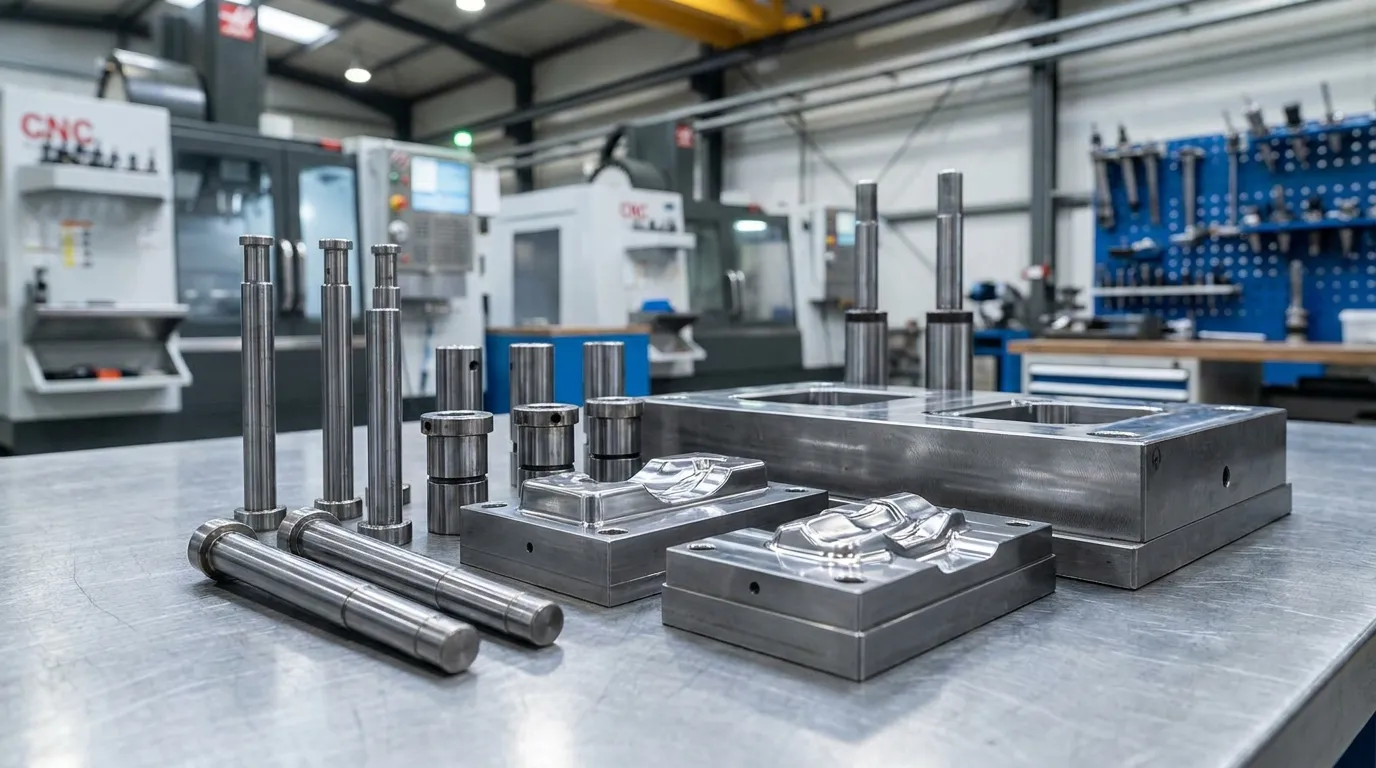
The main mold component categories include mold bases, cavity and core systems, Sistemas eyectores, Canales de refrigeración, venting systems, y componentes guía. Each system controls a different stage of molding accuracy and production efficiency.
Every injection mold combines structural and functional systems. Structural parts hold the mold together, while functional systems manage plastic flow, Refrigeración, and ejection during production.
Componentes estructurales
| Componente | Función principal | Preocupación Común |
|---|---|---|
| Base de molde | Soporta el conjunto completo del molde | Estabilidad de alineación |
| Inserto de cavidad | Forma la forma de la parte externa | Resistencia al desgaste |
| Inserto del núcleo | Geometría interna de formas | Mecanizado de precisión |
| Pasadores guía | Alinear las mitades del molde | Desgaste por fricción |
| Bujes | Apoyar el movimiento guía | Tolerancia de espacio libre |
The mold base acts as the foundation. Cavity and core inserts shape the finished product, while guide pins and bushings maintain alignment during repeated opening and closing cycles.
Sistemas funcionales
| Sistema | Propósito | Impacto en la producción |
|---|---|---|
| Sistema de corredores | Dirige el plástico fundido | Hijo consistency |
| Canales de refrigeración | Elimina el calor | Tiempo de ciclo |
| Sistema de ventilación | Libera aire atrapado | Calidad de la superficie |
| Sistema de eyección | Elimina las piezas terminadas | Prevención de daños |
Cooling and venting systems often receive less attention during RFQs, but they strongly affect production efficiency. Poor cooling design can increase cycle time significantly, while weak venting may create burn marks or trapped gas defects.
Para una explicación más amplia de Estructura de molde de inyección de plástico, it helps to review how these systems work together in complete tooling assemblies.
¿Qué componentes del molde se desgastan más rápido?
Pasadores eyectores, Bujes, puñetazos, and guide components usually wear out first because they handle repeated friction, Calor, y tensión mecánica. Material quality and heat treatment strongly affect replacement frequency.
Moving parts experience constant contact during production cycles. Ejector pins slide repeatedly against steel surfaces, guide bushings absorb alignment pressure, and punches face direct mechanical force. Without proper hardness or lubrication, these components degrade quickly.
An automotive supplier producing high-volume interior clips faced repeated downtime because ejector pins were replaced every two months. The issue was not mold design. The pins used insufficient hardness treatment and wore down under continuous production pressure.
Common high-wear components include:
- Pasadores eyectores
- Bujes guía
- Placas de desgaste
- Puñetazos
- Bujes sprue
Low-cost components are not always the cheapest option long term. For high-cycle molds, stronger heat treatment and better surface finishing often reduce maintenance costs over time. Many manufacturers prioritize durability-focused Piezas de molde de precisión for this reason.
Componentes estándar frente a moldes personalizados: which should buyers choose?
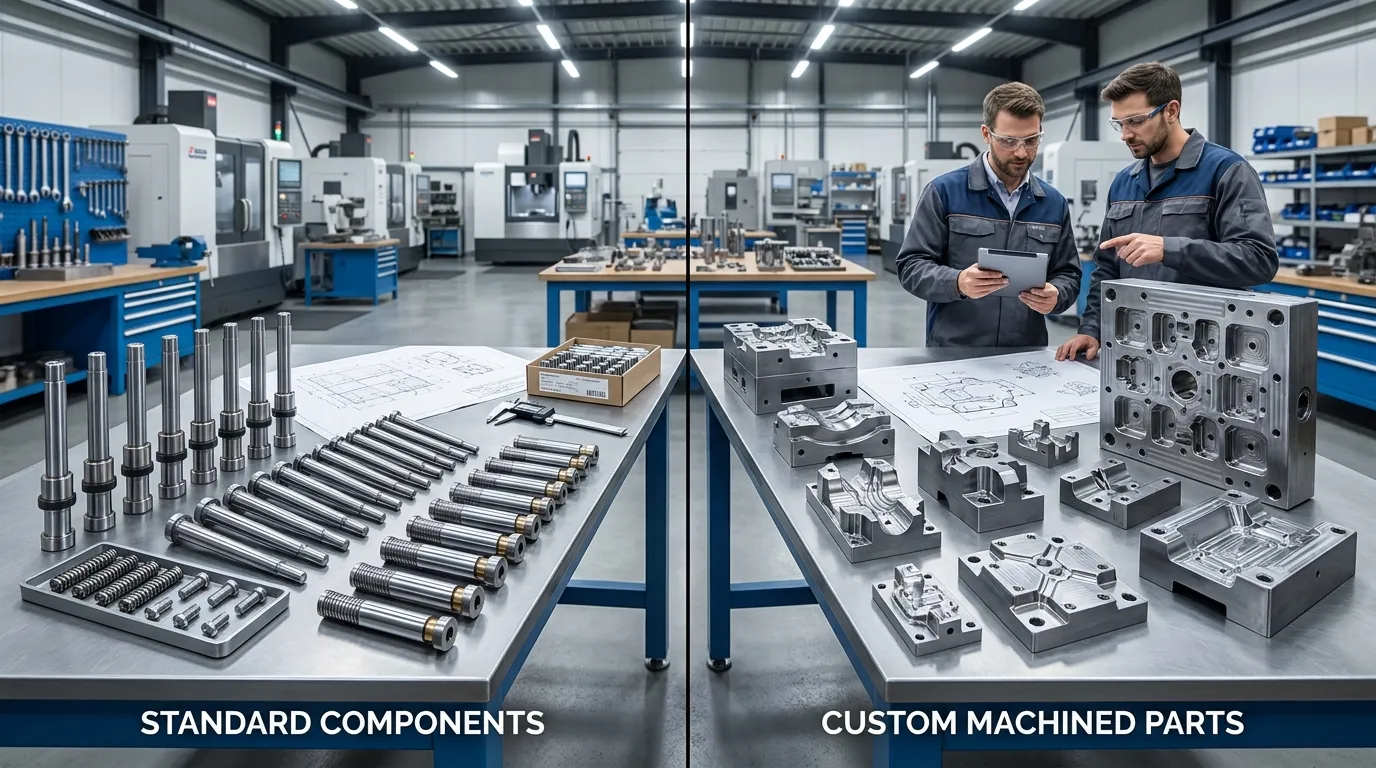
Standard mold components reduce lead time and simplify replacement, while custom components improve fit for specialized applications or tight tolerances. La elección correcta depende del volumen de producción, complejidad, y prioridades de mantenimiento.
Standard components work well for many molds because they are easier to source and replace. Suppliers often keep standard ejector pins, Postes guía, and bushings in stock, which shortens delivery timelines and reduces downtime risk.
Custom components become necessary when molds require unusual geometry, unique tolerances, or specialized production conditions. Medical and electronics molds often use custom-machined parts to maintain tighter dimensional control.
Cuando las piezas estándar funcionan mejor
| Mejor ajuste | Por qué ayudan los componentes estándar |
|---|---|
| Productos de consumo general | Sustitución más rápida |
| Volúmenes de producción moderados | Menor coste de herramientas |
| Entornos con mucho mantenimiento | Gestión de inventario más sencilla |
| Plazos ajustados para proyectos | Plazos de entrega más cortos |
A packaging manufacturer reduced downtime by replacing custom bushings with stocked standard parts. Replacement time dropped from three weeks to four days because the supplier already carried inventory.
Cuando es necesario mecanizar a medida
| Mejor ajuste | Por qué ayudan los componentes personalizados |
|---|---|
| Herramientas médicas | Mayor precisión |
| Geometrías complejas | Mejor ajustado |
| Moldeo a alta presión | Durabilidad mejorada |
| Resinas especiales | Compatibilidad de materiales |
Standard components are not always the safest choice. They reduce sourcing complexity, but custom parts may improve stability for high-precision molds where alignment tolerance is critical. A consumer electronics supplier improved part consistency after switching to custom guide posts with tighter tolerances.
Compradores reseñando Accesorios de molde personalizados should compare long-term maintenance costs, not just initial component pricing.
Qué materiales se utilizan comúnmente para los componentes del molde?
Tool steel is the most common material for mold components because it balances hardness, Mecanizabilidad, y resistencia al desgaste. Different steel grades perform better under different production conditions, especially when molds run high volumes or abrasive resins.
Heat treatment also matters. A well-machined component can still fail early if hardness levels are inconsistent. Many suppliers focus heavily on machining quality but overlook long-term wear stability during heat treatment.
Factores de selección del acero moldeado
| Factor | Por qué importa |
|---|---|
| Dureza | Mejora la resistencia al desgaste |
| Mecanizabilidad | Afecta a la precisión de fabricación |
| Resistencia a la corrosión | Ayuda con ambientes sensibles a la humedad |
| Estabilidad térmica | Reduce el riesgo de deformación |
| Acabado superficial | Soporta una liberación suave de piezas |
A mold running glass-filled plastic resin usually needs stronger wear resistance than one producing simple consumer packaging. Buyers should confirm both steel grade and heat-treatment specifications during RFQ review.
Fast delivery means little if tolerances shift after repeated production cycles. Consistent material quality often matters more than short-term lead time savings.
¿Qué deberían comprobar los compradores antes de enviar una RFQ??
Before requesting a mold component quote, buyers should confirm dimensions, Tolerancias, Grades de materiales, heat treatment requirements, Acabado superficial, y plazos de entrega. Missing specifications often cause delays, inaccurate pricing, or compatibility problems.
Incomplete RFQs create confusion for both buyers and suppliers. Missing tolerances or unclear material requirements can lead to revised quotes, delayed production, or components that fail during assembly.
The safest approach is to standardize RFQ information before contacting suppliers.
Lista de verificación de RFQ para componentes de molde
| Ítem de RFQ | Por qué importa |
|---|---|
| Dibujos técnicos | Confirma la geometría |
| Requisitos de tolerancia | Previene problemas de ajuste |
| Grado de material | Soporta la durabilidad |
| Especificación de tratamiento térmico | Mejora la esperanza de vida |
| Acabado superficial | Afecta al rendimiento del molde |
| Cantidad requerida | Impacto en la fijación de precios |
| Objetivo de entrega | Ayuda a la planificación del inventario |
| Normas de inspección | Confirma las expectativas de control de calidad |
A medical mold project experienced customs delays because component drawings and invoices used inconsistent descriptions. The supplier corrected documentation, but production lost nearly two weeks waiting for replacement approval.
Buyers should also ask suppliers about stocked inventory. A supplier with standard components already available can often prevent emergency shutdowns caused by replacement delays.
How do delivery and customs issues affect mold component sourcing?
Códigos HS incorrectos, missing invoices, and incomplete customs documentation can delay mold component shipments and interrupt production schedules. Buyers should verify export paperwork and supplier inventory before approving urgent orders.
Many sourcing delays happen after production is already complete. Customs clearance issues, incorrect classification codes, and missing paperwork can stop critical replacement components from reaching the factory on time.
Causas comunes de retraso aduanero
- Clasificación incorrecta de HS
- Facturas comerciales ausentes
- Listas de empaquetado incompletas
- Reservas de inspección
- Escasez de inventario de proveedores
A mold manufacturer shipping replacement guide bushings for an automotive line used the wrong HS code during export documentation. Customs flagged the shipment for review, adding several days to clearance time and delaying production restart.
Urgent projects benefit from suppliers that maintain inventory locally or regionally. Replacement speed matters most when a production line is already down. Buyers evaluating global sourcing should ask about stock availability before confirming orders.
According to guidance from Bangladesh Customs and international trade references, documentation consistency plays a major role in preventing shipment delays. Even small invoice mismatches can trigger inspections during customs processing.
How should buyers evaluate mold component suppliers?
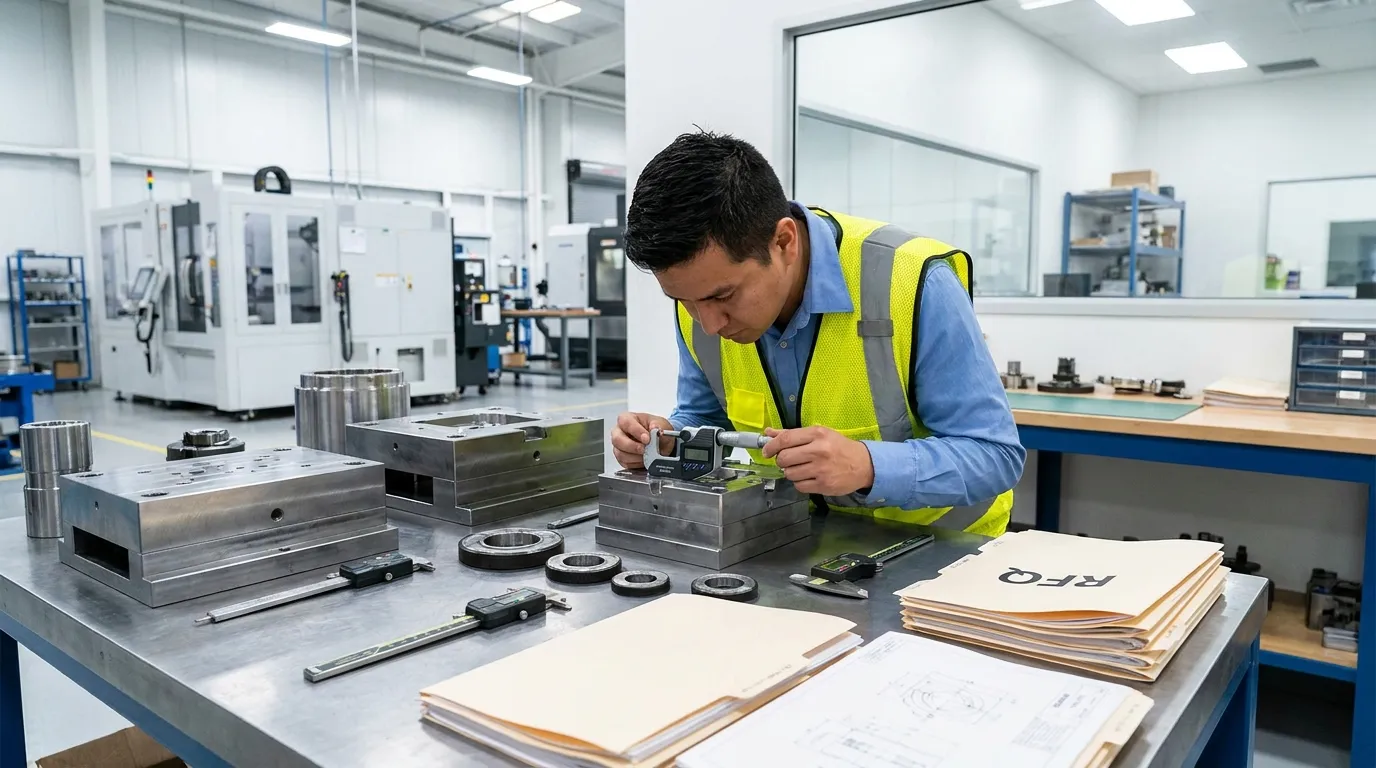
Reliable mold component suppliers should demonstrate precision tolerances, material traceability, inventory capacity, quality inspection systems, and stable delivery performance. Buyers should evaluate long-term replacement support, not only initial pricing.
A supplier may offer competitive pricing but still create problems later through inconsistent machining or delayed replacements. Buyers should focus on repeatability and support, especially for molds running continuous production schedules.
Lista de verificación de evaluación de proveedores
| Área de evaluación | Qué deberían verificar los compradores |
|---|---|
| Capacidad de tolerancia | Normas de precisión CNC |
| Trazabilidad de materiales | Certificación en acero |
| Control de tratamientos térmicos | Consistencia de dureza |
| Inspección de calidad | Sistemas de medición |
| Soporte de inventario | Disponibilidad de reemplazo |
| Experiencia en exportación | Exactitud de la documentación |
An electronics manufacturer reduced alignment defects after switching suppliers because the new vendor maintained tighter guide-post tolerances and stronger inspection procedures.
Para compradores que comparan Aplicaciones en la fabricación de moldes, supplier flexibility also matters. Different industries require different wear resistance, Tolerancias, and production speeds. A supplier experienced in automotive tooling may not always be the best fit for medical or electronics molds.
Acertando en el siguiente paso
Choosing the right mold components is less about finding the cheapest option and more about reducing long-term production risk. Calidad del material, Precisión en el mecanizado, Tratamiento térmico, Soporte de inventario, and delivery reliability all affect mold performance after installation.
Antes de enviar tu próxima RFQ, review the component system carefully and identify which parts directly affect alignment, Desgaste, y consistencia de ciclos. Strong sourcing decisions early in the process usually prevent expensive downtime later. Buyers who understand mold systems can compare suppliers more confidently and build more stable production operations.
Preguntas frecuentes
What are the main systems of a mold?
The main mold systems include the mold base, Sistema de alimentación, Sistema de refrigeración, venting system, ejection system, and guiding system. Each system supports molding accuracy, Eficiencia del ciclo, and consistent part quality.
What are standard mold components?
Standard mold components are pre-manufactured parts made to common industry dimensions and tolerances. They reduce lead time, simplify replacement, and lower sourcing costs compared with fully custom parts.
What are the most important factors when choosing mold steel?
The most important mold steel factors are hardness, Resistencia al desgaste, Mecanizabilidad, and heat-treatment stability. The correct choice depends on production volume, Tipo resina, y la vida útil esperada del moho.
What causes customs delays for mold component shipments?
Customs delays often happen because of incorrect HS codes, incomplete invoices, missing documentation, o requisitos de inspección. Delays can interrupt production schedules when replacement components are urgently needed.
Which mold components require replacement most often?
Pasadores eyectores, Bujes guía, puñetazos, and wear plates usually require replacement first because they experience repeated friction and mechanical stress. Proper lubrication and heat treatment can extend their service life.
Should buyers choose standard or custom mold components?
Standard components work well for many applications because they reduce cost and replacement complexity. Custom components are better for unusual geometries, specialized tolerances, or high-performance tooling requirements.
Compartir:



Escrito por Sunshine
Al sol, Somos un fabricante y proveedor profesional de componentes de moldes de precisión, ofreciendo una amplia gama de productos para aplicaciones de estampado y moldes de inyección. Nuestro enfoque principal es el punzonamiento de troqueles, Pasadores y fundas eyector, y postes guía y casquillos. Con mecanizado CNC avanzado, Control de calidad estricto, y una fuerte capacidad de producción, Garantizamos la fiabilidad, Piezas de alta precisión, junto con componentes estándar en stock para un suministro global rápido y eficiente.
NOTICIAS
CONSIGUE EL SERVICIO
Con piezas de calidad para todos los presupuestos y personal amable formado para que tu visita sea informativa y sin complicaciones.
