



Troqueles de punzonamiento: Tipos, Materiales, Tolerancias, and Buying Guide
Punching dies are precision tooling systems used for cutting, shaping, and forming sheet materials in industrial manufacturing. Buyers should compare die types, tool steel vs carbide materials, tolerance capability, clearance control, supplier machining standards, and logistics readiness before ordering. The best punching die setup depends on production volume, Dureza del material, required accuracy, Expectativas de mantenimiento, and supplier quality control.
Choosing the wrong die setup can increase scrap rates, shorten tool life, and delay production schedules. Buyers also face pressure to balance cost, precision, and lead time, especially when sourcing custom tooling from overseas suppliers. This guide explains how punching dies work, ¿qué materiales rinden mejor, how tolerances affect quality, and what to check before placing an order.
What are punching dies and how do they work?
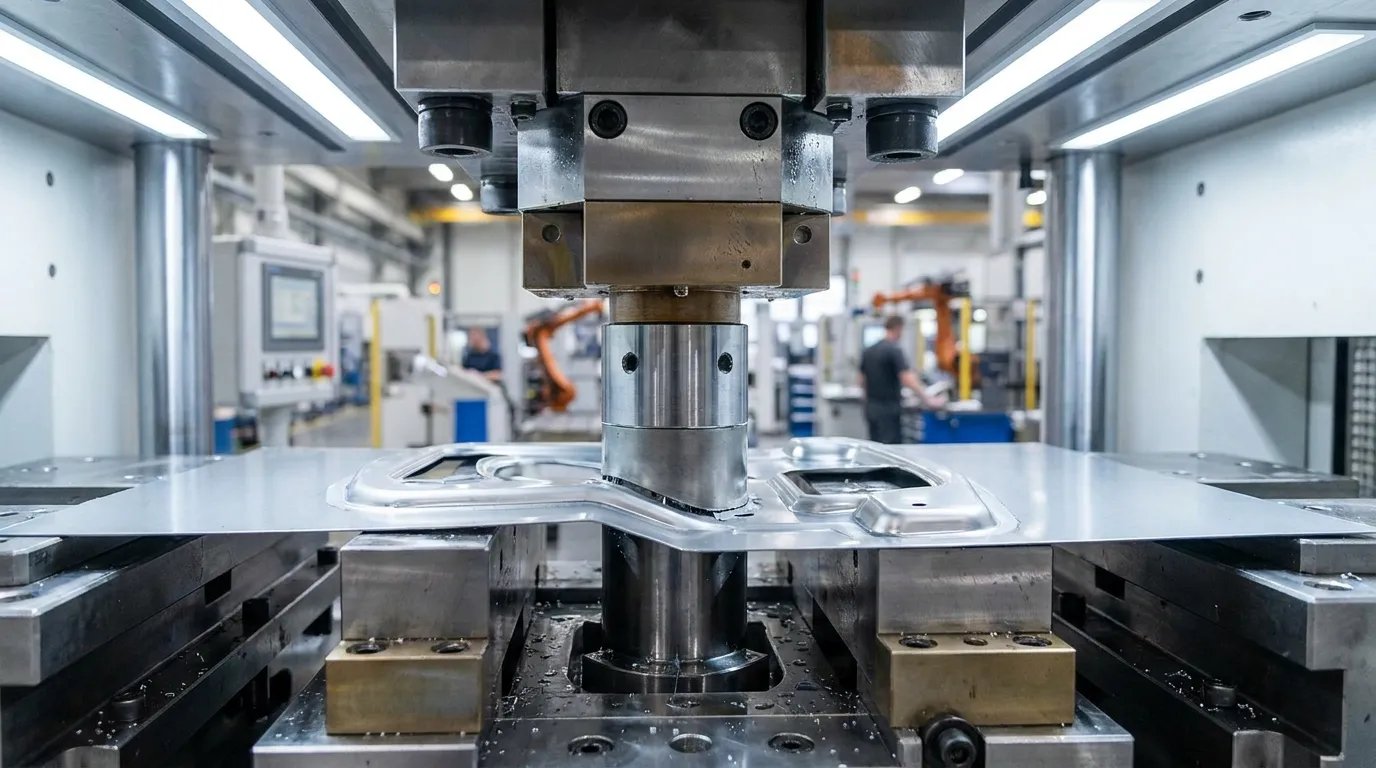
Punching dies are tooling systems used to cut, Forma, or form material through controlled force and precision alignment. The punch applies pressure while the die receives and shapes the material, allowing consistent high-volume production in stamping and forming operations.
A punching die system includes two core components: the punch and the die. The punch presses into the material, while the die supports the material and controls the final shape. This process is common in sheet metal stamping, Fabricación de piezas de automóviles, Producción electrónica, and appliance components.
The accuracy of the tooling directly affects edge quality, Formación de Burr, and repeatability. Even small alignment issues can create uneven cuts or excessive wear. That’s why manufacturers focus heavily on machining precision, Tratamiento térmico, and clearance control during production.
Los compradores que necesiten una visión más amplia de los sistemas de herramientas industriales pueden revisar esto Guía de componentes de molde junto con los conceptos básicos de herramientas explicados en Conceptos básicos de componentes del chip.
La terminología del sector sobre punzones y troqueles se explica claramente por Guía de terminología de MISUMI para punch and die.
Which types of punching dies are used in manufacturing?
Progressive dies support high-volume automated production, while compound dies combine multiple cutting operations in one stroke. The best choice depends on production speed, complejidad, material thickness, y requería precisión.
Different punching die designs are built for different manufacturing goals. A low-volume fabrication shop may prioritize lower tooling cost and easier maintenance. A high-speed automotive supplier usually focuses on cycle time, Consistencia, y resistencia al desgaste.
| El tipo | Mejor Uso | Principal ventaja | Limitaciones |
|---|---|---|---|
| Progressive Die | Producción en gran volumen | Procesamiento automatizado rápido | Mayor complejidad de herramientas |
| Matriz compuesta | Operaciones de corte múltiples | Alta precisión en un solo golpe | Menos flexible para conformado complejo |
| Troquel de blanking | Corte de piezas planas | Producción de blanks limpios | Capacidad limitada de conformado |
| Troquelada de formación | Flexión y modelado | Componentes formados por asas | Más variación de configuración |
Matrices progresivas frente a matrices de punzonado compuesto
Progressive dies move material through several stations in sequence. Each station performs a separate operation, which improves production speed for large manufacturing runs. These dies are common in automotive and electronics manufacturing.
Compound dies perform multiple cutting operations at the same station during one press stroke. They’re often used when part accuracy matters more than production speed. Según Referencia del troquel compuesto de MISUMI, compound tooling structures are commonly paired with hardened tool steels such as SKD11.
For buyers comparing broader tooling categories, Los sistemas de herramientas provides additional manufacturing context.
What materials are best for punching dies?
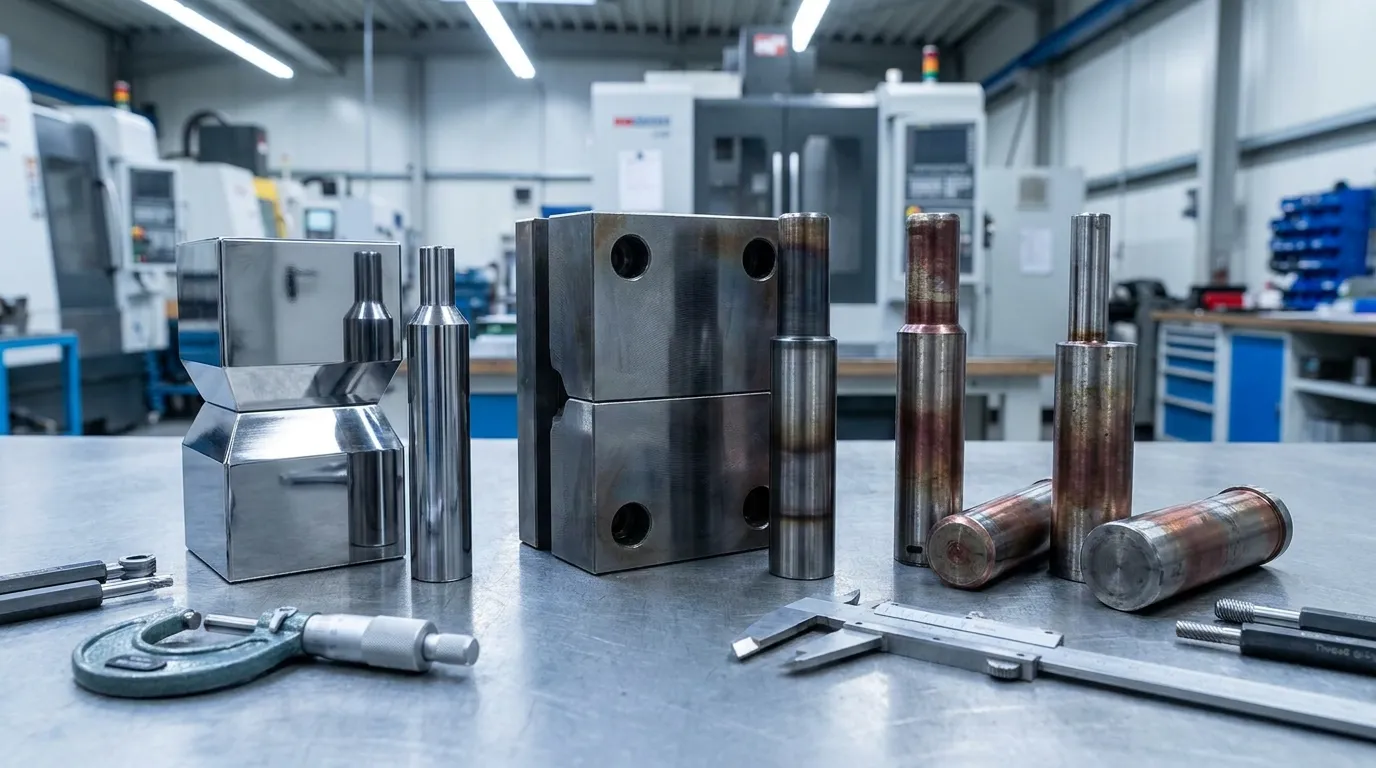
Tool steel punching dies balance durability and cost for many industrial applications, while carbide dies offer superior wear resistance for high-volume production. Material choice should match production cycles, sheet material hardness, y expectativas de mantenimiento.
Tool material affects wear resistance, sharpening frequency, edge quality, and overall operating cost. Buyers should match material selection to actual production conditions instead of assuming the hardest material is always the best choice.
Carbide punching dies are not always the best option. They last longer in high-volume production, but tool steel is often easier and cheaper to maintain for shorter production runs or moderate workloads.
Tabla de selección de materiales para troqueles de punzonamiento
| Material | Resistencia al desgaste | Nivel de coste | Mejor Volumen de Producción | Frecuencia de mantenimiento |
|---|---|---|---|---|
| Acero para herramientas D2 | Medio-alto | Medio | Tiradas de volumen medio | Moderado |
| SKD11 | Alto | Medio-alto | Estampado de precisión | Moderado |
| Carburo | Muy alto | Alto | Producción en gran volumen | Bajo |
| Acero de alta velocidad | Medio | Medio | Uso industrial general | Moderado |
A factory producing thin stainless steel brackets for automotive use may benefit from carbide tooling because downtime costs are high. In contrast, a smaller fabrication company producing limited batches may save money with tool steel dies that are easier to sharpen and replace.
Cuando el carburo vale la pena, el coste es mayor
Carbide becomes more practical when production volumes are high and materials are abrasive. It performs well with stainless steel, electrical steel, and other harder materials that increase wear rates.
Extremely tight tolerance claims are not automatically better. Over-specifying tolerances can raise tooling costs without improving production quality. Buyers should request tolerances that match the actual application and production environment.
Los fabricantes que comparan materiales y componentes de herramientas también pueden revisar Materiales de herramientas de precisión for additional component references.
Why do punch and die tolerances matter?
Punch and die tolerances directly affect cut quality, Formación de Burr, tool wear, y la consistencia en la producción. Proper clearance helps maintain cleaner edges and longer tooling life while reducing scrap and maintenance costs.
Tolerance control determines how accurately the punch and die interact during production. Poor clearance settings can create rough edges, excessive burrs, or premature chipping. Con el tiempo, these issues increase scrap rates and maintenance costs.
Punch and die clearance refers to the gap between the cutting edges during operation. Según Guía de autorización de MISUMI, proper clearance improves cutting performance and extends tooling life.
What is punch and die clearance?
Clearance settings vary based on material thickness and hardness. Thin aluminum sheets need different clearance than thick stainless steel plates. Buyers should confirm that suppliers understand the target material before approving production drawings.
A practical example is burr reduction in thin sheet production. One manufacturer reduced secondary finishing work after adjusting clearance for thinner stainless steel stock. Cleaner edges reduced polishing time and improved consistency across production batches.
Lista de Tolerancia y Calidad
- Confirma el grosor del material antes de definir el espacio libre
- Ajusta los niveles de tolerancia a las necesidades reales de la aplicación
- Verificar la capacidad de mecanizado EDM y CNC
- Solicitar informes de inspección para dimensiones críticas
- Revisa los procedimientos de afilado y mantenimiento
Maintenance planning also matters because worn tooling can slowly change clearance values over time. Buyers sourcing long-term replacement components can review Piezas de repuesto para herramientas for ongoing tooling support.
How do you choose the right punching die supplier?
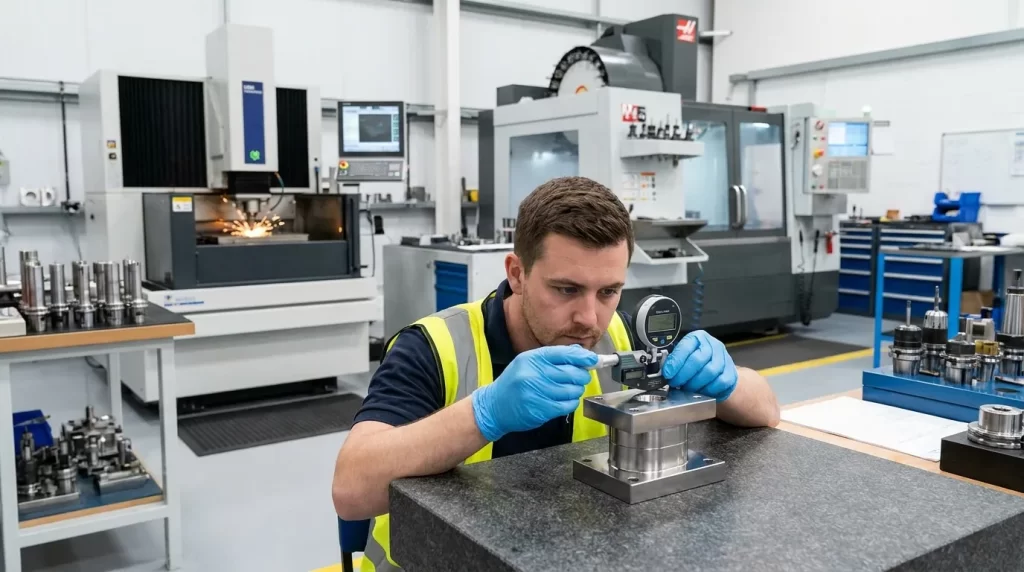
A reliable punching die supplier should provide verified material specifications, machining capabilities, tolerance controls, and quality inspection procedures. Buyers should also confirm lead times, production capacity, and experience with similar applications.
Supplier selection affects more than price. Weak machining standards or inconsistent inspection procedures can increase scrap, Tiempo de inactividad, and replacement costs long after delivery.
The cheapest overseas punching die supplier can create higher long-term costs if documentation, clearance control, or quality inspection standards are inconsistent. Buyers should compare supplier capability, not just quotation pricing.
Lista de verificación para evaluación del proveedor de troqueles de perforación
| Área de evaluación | Qué confirmar |
|---|---|
| Capacidad CNC | Capacidad de mecanizado de precisión |
| Capacidad de EDM por cable | Precisión del corte fino |
| Certificación de materiales | Grados verificados de acero o carburo |
| Documentación de control de calidad | Informes de inspección y tolerancias |
| Fiabilidad en los plazos de entrega | Programación realista de la producción |
| Apoyo a la exportación | Coordinación de embalaje y envío |
A strong supplier should also understand the buyer’s industry requirements. An automotive stamping supplier may need different tolerances than an appliance manufacturer or electronics producer.
If you’re evaluating broader tooling manufacturing experience, Experiencia en fabricación de troqueles provides additional context about industrial die production capabilities.
What should buyers include in a punching die RFQ?
A detailed RFQ helps suppliers quote accurately and reduces production misunderstandings. Missing technical details often lead to delayed revisions, incorrect tolerances, or tooling redesigns after production begins.
An effective punching die RFQ should include:
- Dibujos CAD o archivos 3D
- Especificaciones de materiales
- Tolerancias requeridas
- Estimaciones del volumen de producción
- Expectativas de acabado superficial
- Tiempo de entrega objetivo
- Información de la máquina de prensa si es relevante
A common sourcing mistake happens when buyers provide drawings without tolerance details. One supplier may quote for standard machining tolerance, while another assumes ultra-precision requirements. That difference can change pricing and lead time significantly.
For projects involving custom tooling configurations, Soluciones personalizadas de chips can help buyers compare available options before requesting quotations.
How can buyers reduce customs and shipping delays for punching dies?
Códigos HS incorrectos, incomplete invoices, and missing compliance documents are common causes of customs delays for industrial tooling shipments. Buyers can reduce delays by confirming classification accuracy and documentation requirements before shipment.
International tooling shipments often move through multiple customs checks before delivery. Even accurate tooling production can become a problem if shipping paperwork is incomplete or incorrectly classified.
Según Referencia del código HS de FreightAmigo, industrial tooling classifications must match the actual product category and intended use. Documentation errors are also identified as a common cause of customs delays in Guía de retraso aduanero de EximAgent.
Lista de verificación para la prevención de retrasos aduaneros
- Verifica la clasificación del código HS antes del envío
- Utiliza descripciones detalladas de productos en las facturas
- Incluir documentación del país de origen
- Confirma que el embalaje coincide con los documentos de envío
- Revisar los requisitos de importación con los socios de transporte
- Conserva los registros de comunicación con proveedores y aduanas
One imported tooling shipment experienced delays because the invoice described the product only as “metal tooling.” Customs officers requested additional classification details, which delayed delivery and production scheduling. A more detailed invoice could have prevented the issue.
What maintenance practices extend punching die lifespan?
Regular maintenance reduces wear, mejora la consistencia, and protects tooling accuracy over time. Even high-quality dies lose performance when sharpening schedules and inspections are ignored.
A preventive maintenance approach usually costs less than replacing damaged tooling unexpectedly. Buyers should confirm that maintenance procedures are realistic for their production environment before selecting tooling materials.
Lista de verificación para el mantenimiento de troqueles de perforación
- Inspecciona los bordes de corte regularmente
- Monitorizar la formación de las muelas durante la producción
- Sigue los intervalos programados de afilado
- Store tooling in dry, protected conditions
- Comprobar la alineación y el espacio libre durante el mantenimiento
- Sustituye rápidamente los componentes de la guía desgastados
A small production facility using tool steel dies may sharpen tooling more often but spend less on replacement costs overall. High-volume manufacturers often accept higher carbide tooling costs because fewer production stoppages offset the investment.
Los fabricantes que planifican calendarios de mantenimiento a largo plazo pueden explorar Piezas de mantenimiento de herramientas for replacement component support.
Acertando en el siguiente paso
The best punching dies are the ones that match your production reality. Material hardness, Volumen de producción, Requisitos de tolerancia, and supplier capability all affect long-term performance and operating cost.
Before placing an order, confirm machining standards, inspection procedures, material certification, and shipping documentation requirements. A lower upfront price does not always mean lower production cost over time.
If your team is comparing broader tooling systems or manufacturing applications, reviewing an Aplicaciones en moldes de inyección resource can also help connect punching die selection with larger production planning decisions.
Preguntas frecuentes
¿Cuál es la diferencia entre un punzón y un duel??
A punch applies force while the die shapes and supports the material. Both components work together to create accurate cuts, holes, or formed shapes during stamping and punching operations.
What materials are commonly used for punching dies?
Tool steel and carbide are the most common punching die materials. Tool steel balances durability and cost, while carbide performs better in high-volume or high-wear manufacturing environments.
What is punch and die clearance?
Punch and die clearance is the controlled gap between cutting components. Proper clearance improves edge quality, reduces burr formation, and helps extend tooling lifespan during production.
Which punching die type is best for high-volume production?
Progressive dies are widely used for high-volume production. They perform multiple operations in sequence, which improves speed, Consistencia, and automation efficiency in large manufacturing runs.
What causes punching dies to wear out quickly?
Incorrect clearance and poor maintenance are major causes of punching die wear. Excessive production load, improper material selection, and delayed sharpening schedules can also shorten tooling lifespan.
What documents help avoid customs delays for industrial tooling?
Accurate shipping and classification documents help reduce customs delays. Commercial invoices, HS codes, and origin documentation should all match the actual tooling being imported.
Compartir:



Escrito por Sunshine
Al sol, Somos un fabricante y proveedor profesional de componentes de moldes de precisión, ofreciendo una amplia gama de productos para aplicaciones de estampado y moldes de inyección. Nuestro enfoque principal es el punzonamiento de troqueles, Pasadores y fundas eyector, y postes guía y casquillos. Con mecanizado CNC avanzado, Control de calidad estricto, y una fuerte capacidad de producción, Garantizamos la fiabilidad, Piezas de alta precisión, junto con componentes estándar en stock para un suministro global rápido y eficiente.
NOTICIAS
CONSIGUE EL SERVICIO
Con piezas de calidad para todos los presupuestos y personal amable formado para que tu visita sea informativa y sin complicaciones.
