



Moldeo por inyección de dispositivos médicos: Lista de verificación del proveedor antes de usar herramientas
Medical device injection molding suppliers should be evaluated on validation support, tolerance capability, Sistemas de trazabilidad, cleanroom controls, and tooling documentation before production begins. Buyers should verify inspection equipment, DFM review quality, lead-time planning, and regulatory readiness before approving tooling investment.
A tooling quote can look competitive on paper and still create major problems later. Medical programs depend on repeatable production, Soporte de validación, and clear documentation from the start. If a supplier struggles with traceability, engineering communication, or tolerance control before tooling begins, those problems usually become more expensive during validation and launch.
What should buyers verify before approving medical device tooling?
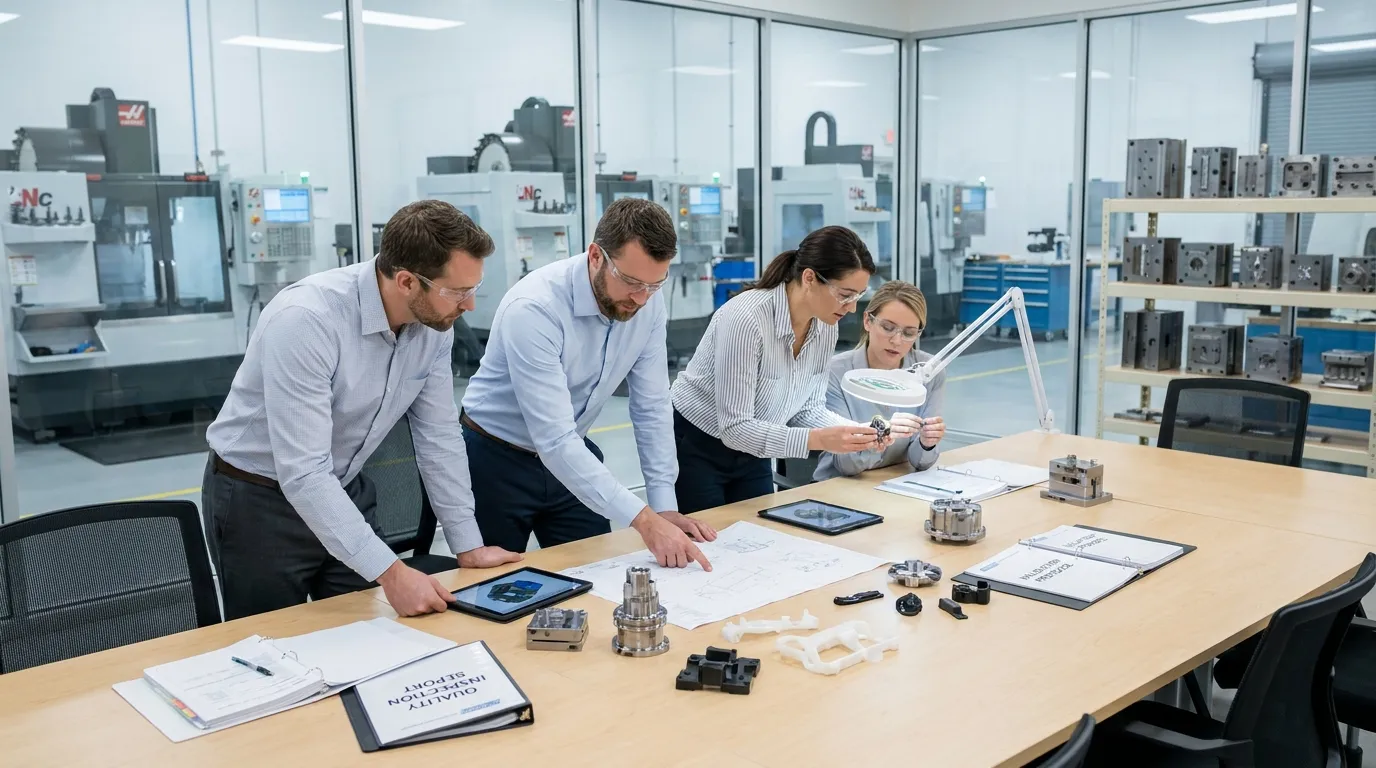
Medical device injection molding suppliers should be evaluated on validation support, traceability, tolerance control, cleanroom capability, and documentation readiness before tooling approval. A low tooling quote does not reduce regulatory or launch risk.
Antes de aprobar las herramientas, buyers should confirm that the supplier understands regulated manufacturing requirements. General injection molders may produce acceptable consumer parts, but medical projects need stronger process control, documented validation support, and repeatable inspection systems.
A supplier should also explain how engineering reviews, Mantenimiento de moho, process validation, and production records will be managed after tooling starts. Vague answers during quoting often signal bigger communication problems later.
| Área de Proveedores | Qué verificar | Por qué importa |
|---|---|---|
| Sistemas de calidad | Procedimientos ISO 13485 | Apoya la producción regulada |
| Soporte de validación | Documentación de IQ/OQ/PQ | Ayuda durante auditorías y aprobaciones |
| Capacidad de inspección | CMM y sistemas de medición de contornos | Confirma tolerancias repetibles |
| Trazabilidad | Lote de resina y seguimiento de producción | Reduce el riesgo de cumplimiento |
| Soporte para sala limpia | Procedimientos de producción controlados | Ayuda a prevenir la contaminación |
| Gestión de herramientas | Mantenimiento y planes de componentes de repuesto | Protege la repetibilidad a largo plazo |
| Proceso de ingeniería | Revisión del DFM antes del corte del acero | Reduce las revisiones de herramientas |
Some buyers focus too heavily on tooling price. That approach can backfire. The lowest tooling quote often becomes the most expensive option once revision cycles, Retrasos en la validación, and launch disruptions are added to the total project cost.
If your team still needs broader background on mold construction and tooling fundamentals, Revisa esto Guía de diseño de moldes de inyección before supplier selection moves forward.
Which certifications and quality systems actually matter?
ISO 13485 is the baseline certification most buyers expect for regulated medical molding projects, but buyers should also confirm traceability procedures, document control, and validation support instead of relying on certification logos alone.
Most medical buyers start with ISO 13485 because it supports quality management and traceability expectations for regulated manufacturing. El FDA also expects manufacturers to maintain documented quality controls throughout production and validation activities.
Certification alone does not prove that a supplier can support a regulated launch. Buyers should ask how process changes are documented, how inspection records are stored, and how validation support is managed during production scaling.
Por qué ISO 13485 por sí sola no es suficiente
Some suppliers advertise ISO 13485 certification but still struggle with practical execution. A supplier may pass audits while lacking strong engineering communication, process monitoring, or tooling maintenance discipline.
That gap becomes obvious during validation or engineering changes. Por ejemplo, a supplier may approve tooling without detailed DFM feedback, then request expensive mold revisions after initial sampling. Those delays can push qualification timelines back by weeks.
| Área de Calidad | Qué deberían comprobar los compradores |
|---|---|
| ISO 13485 | Estado actual de la certificación |
| Control de documentos | Procedimientos de seguimiento de revisiones |
| Trazabilidad | Rastreo de resina y lotes |
| Soporte de validación | Experiencia en IQ/OQ/PQ |
| Control de cambios | Flujo de trabajo de aprobación de ingeniería |
| Proceso CAPA | Procedimientos de acción correctiva |
A strong supplier should explain these systems clearly during the quoting stage. If answers stay vague or overly sales-focused, buyers should slow the approval process.
Can the supplier consistently hold medical-grade tolerances?
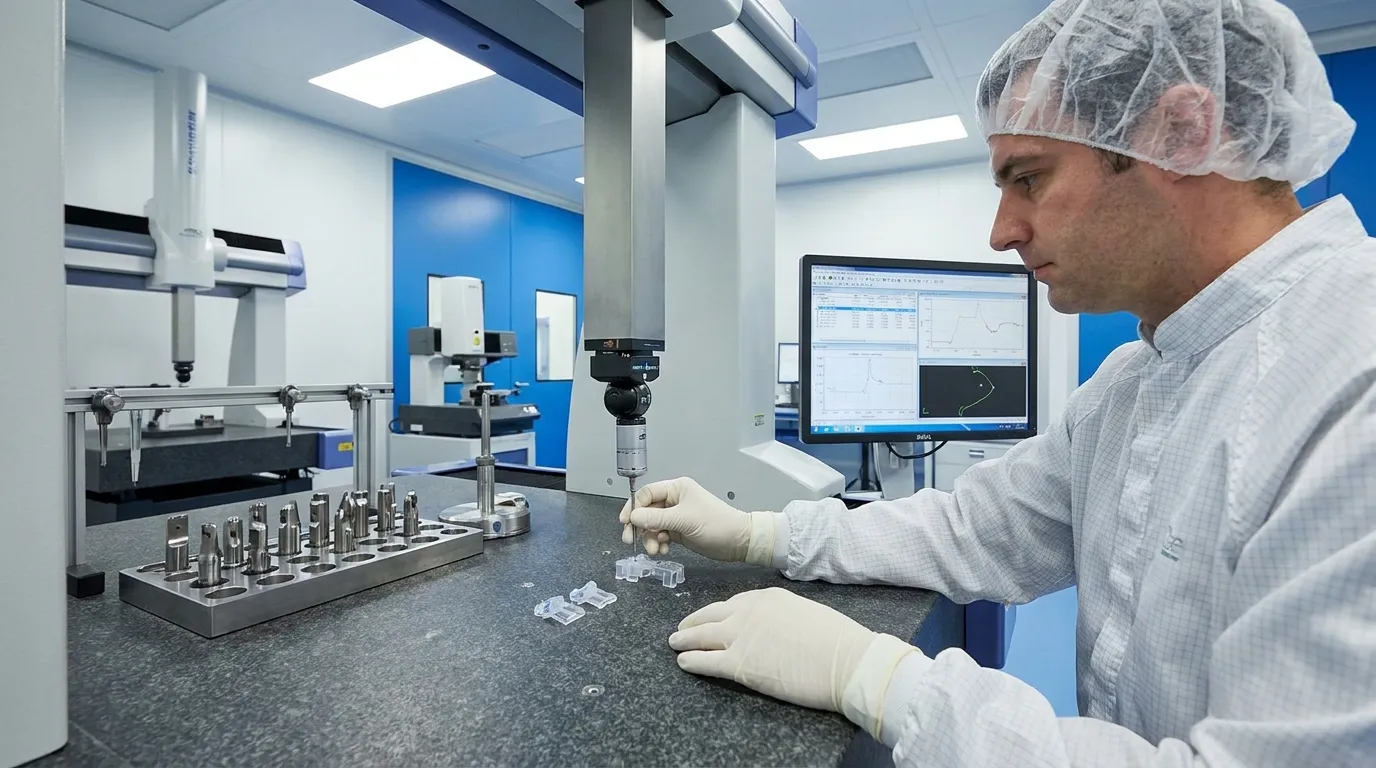
Medical molding suppliers should prove tolerance capability with measurement systems, documented inspection procedures, and repeatability data instead of verbal claims. Buyers should request sample reports before tooling approval.
Medical components often include mating surfaces, fluid pathways, or assembly features that depend on consistent dimensions across every production run. A supplier should explain how those dimensions are measured, monitored, and maintained over time.
Buyers should request sample inspection reports before tooling starts. Those reports help confirm whether the supplier already supports precision production work instead of simply promising it during sales discussions.
What inspection equipment should suppliers have?
Qualified suppliers commonly use coordinate measuring machines (CMMs), contour measuring systems, Equipos de inspección óptica, and documented process monitoring tools. Inspection capability matters because medical tooling wear can slowly shift dimensions over long production cycles.
Proveedores que utilizan materiales de herramientas de alta calidad y Piezas de molde resistentes al desgaste often maintain better dimensional consistency during repeat production.
A good example is a multi-cavity medical housing where one cavity slowly drifts out of tolerance. Without proper cavity monitoring, suppliers may not detect the issue until assembly failures appear downstream. Buyers should ask how cavity balance and dimensional drift are monitored during production.
How important is DFM review before steel cutting?
A detailed DFM review before steel cutting reduces tooling revisions, dimensional defects, and launch delays. Medical buyers should expect documented recommendations before final mold approval.
DFM, or Design for Manufacturability, identifies molding risks before tooling enters production. That review should happen before steel cutting starts, not after initial samples fail dimensional inspection.
A proper DFM review covers wall thickness, Ubicación de la puerta, Distribución de refrigeración, Ángulos de tiro, shrinkage expectations, and part ejection strategy. Suppliers should provide documented recommendations instead of general verbal comments.
- Revisión de geometría de piezas
- Análisis de borrador y socavo
- Recomendación de ubicación de la puerta
- Evaluación de enfriamiento y contracción
- Aprobación de viabilidad de herramientas
- Aprobación final de ingeniería antes del mecanizado
A diagnostic device housing is a good example. If the gate location creates uneven shrinkage near a sealing surface, the supplier may need additional mold revisions after T1 sampling. That change can affect validation schedules and increase tooling costs.
Some buyers skip detailed DFM reviews to shorten launch timelines. That shortcut rarely saves time. Engineering problems found after tooling begins are slower and more expensive to correct.
What validation and documentation support should suppliers provide?
Medical molding suppliers should support IQ/OQ/PQ validation, maintain traceable production records, and document process changes throughout the tooling lifecycle. Missing documentation creates regulatory and audit risk.
Validation support is one of the clearest differences between standard injection molding suppliers and regulated medical manufacturers. Buyers should confirm that suppliers already support IQ, OQ, and PQ workflows before tooling approval.
Documentation should include material traceability, inspection records, process settings, engineering revisions, and mold maintenance history. Según el FDA, manufacturers are expected to maintain documented quality procedures and production controls throughout regulated manufacturing operations.
What documents should buyers request before tooling starts?
- Informes del DFM
- Validación de documentos de planificación
- Procedimientos de inspección
- Procedimientos de trazabilidad de materiales
- Expectativas de mantenimiento del moho
- Flujos de trabajo de revisión de ingeniería
- Calendarios de muestreo y aprobación
Suppliers providing detailed documentation early usually manage production transitions more smoothly later. That matters when launch schedules depend on coordinated validation timing.
Por ejemplo, one disposable medical component project experienced delays because resin traceability records were incomplete during validation review. The tooling itself performed correctly, but missing documentation still disrupted the approval timeline.
Los equipos que comparan proveedores también pueden querer revisar más ampliamente Soporte de moldeo médico capabilities before final sourcing decisions are made.
How should buyers evaluate cleanroom and contamination control?
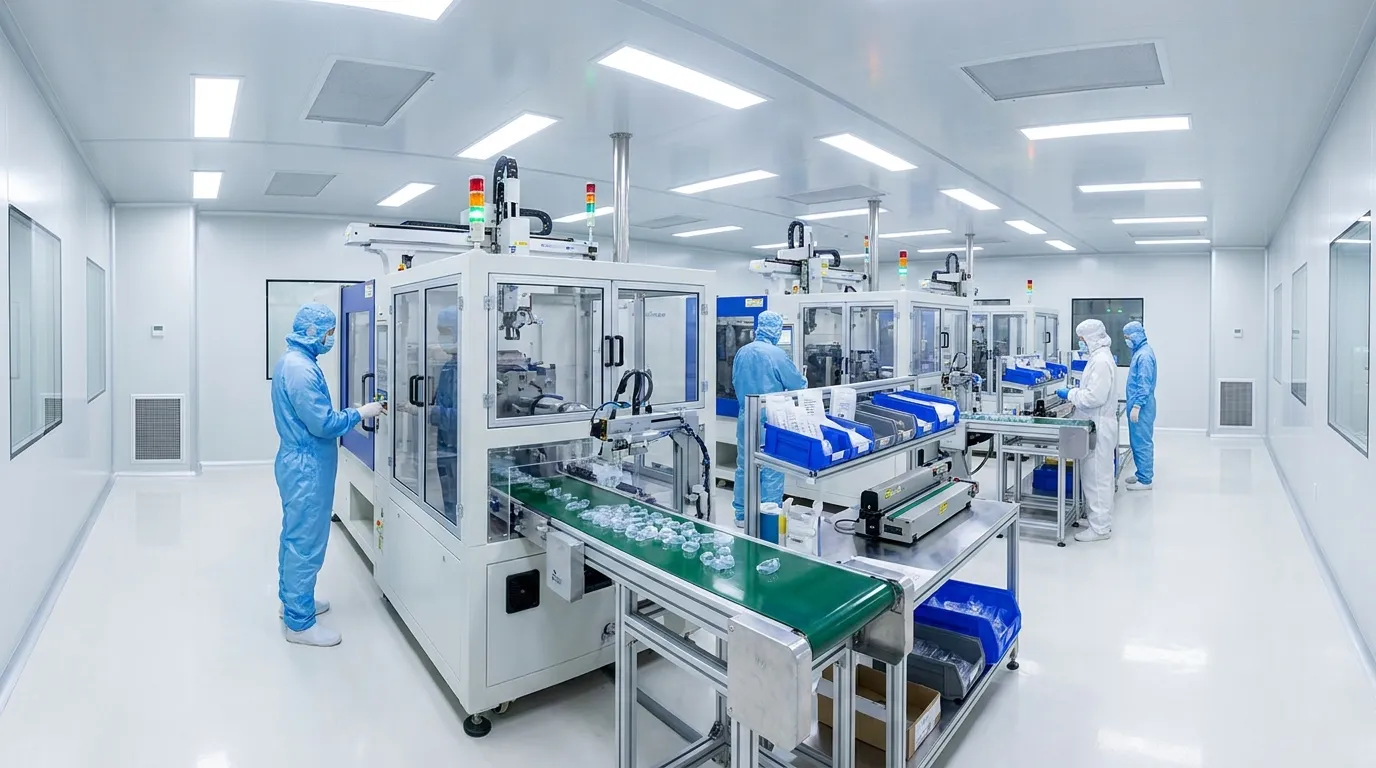
Cleanroom capability should be evaluated as an operational system, not just a marketing label. Buyers should ask how materials, Operadores, Embalaje, and production flow are controlled inside the manufacturing environment.
Some suppliers advertise cleanroom molding but outsource secondary handling or packaging steps outside controlled conditions. That setup may create contamination risk for sensitive medical products.
| Área | Qué deberían verificar los compradores |
|---|---|
| Clase de sala limpia | Nivel de clasificación ISO |
| Manipulación de materiales | Almacenamiento controlado de resina |
| Procedimientos de personal | Vestido y control de acceso |
| Proceso de envasado | Manejo protegido tras moldeado |
| Procedimientos de limpieza | Control programado de contaminación |
Surface quality can also affect contamination management and cleaning consistency. Buyers reviewing cosmetic or functional requirements may benefit from understanding Requisitos de acabado superficial during tooling evaluation.
A cleanroom is not always necessary for every project. Stable, lower-risk components may run successfully in controlled manufacturing environments without full cleanroom production. Buyers should match production controls to the actual regulatory and product requirements.
What lead-time and customs risks should buyers plan for?
Medical device tooling timelines depend on design stability, Requisitos de validación, Complejidad de las herramientas, and international logistics. Customs delays and late engineering changes can disrupt regulated launch schedules.
Medical tooling projects often move slower than standard commercial programs because validation, inspection approval, and engineering review cycles add additional steps to the launch schedule.
Según Visión general del tiempo de entrega de moldeo por inyección de Evok Poly, tooling revisions and engineering changes are common causes of delayed production schedules. Offshore programs may also face shipping inspections or customs delays during mold transfer and sampling activities.
Por qué los cambios tardíos en el diseño provocan grandes retrasos
Late-stage design revisions create more disruption in regulated projects because validation documents, inspection plans, and approval schedules may also need updates.
| Fase del proyecto | Diseño de establos | Cambios tardíos en la ingeniería |
|---|---|---|
| Análisis de DFM | 1 semana | 2 semanas |
| Mecanizado de herramientas | 3 semanas | 4 semanas |
| Muestreo inicial | 1 semana | 2 semanas |
| Preparación de validación | 1 semana | 2 semanas |
| Aduanas y transporte marítimo | 1 semana | 1-2 semanas |
A tooling shipment held during customs inspection can easily delay validation scheduling if the launch timeline has no built-in buffer. Crescent Industries also notes that offshore sourcing may create additional logistics and communication challenges for regulated industries.
Offshore tooling is not always the wrong choice. Stable programs with predictable production volumes can work well internationally. Projects requiring frequent engineering changes usually benefit from closer supplier collaboration and faster revision cycles.
Which supplier red flags should buyers never ignore?
Suppliers that avoid technical reviews, cannot explain validation procedures, or provide unrealistic lead times often create expensive tooling and launch problems later in the project.
One of the clearest warning signs is weak technical communication during quoting. If a supplier avoids detailed DFM discussions or struggles to explain inspection methods, buyers should expect larger problems once tooling starts.
Another red flag is unrealistic scheduling. Medical tooling projects involve validation planning, inspection approval, and engineering coordination. Suppliers promising unusually short timelines without technical review may be underestimating the work involved.
- No hay proceso de validación documentado
- Afirmaciones vagas de tolerancia
- No hay informes de inspección de muestra
- Mala comunicación de ingeniería
- No hay plan de mantenimiento contra el moho
- Procedimientos de trazabilidad limitada
- Precios de herramientas extremadamente bajos
Tooling durability also matters during long production runs. Suppliers that ignore proper Calidad del tratamiento térmico may face faster wear, Deriva dimensional, and inconsistent repeatability over time.
Qué hacer a continuación
Choosing a medical device injection molding supplier is less about finding the cheapest tooling quote and more about reducing production risk before launch. Buyers should evaluate validation support, engineering communication, Capacidad de inspección, and documentation systems before approving steel cutting.
A supplier that provides detailed DFM feedback, Líneas temporales realistas, and clear traceability procedures usually creates smoother validation and production outcomes later. Start with a structured qualification checklist, compare suppliers side by side, and confirm how production support will continue after tooling approval.
Preguntas frecuentes
What certifications should a medical injection molding supplier have?
Most medical buyers expect ISO 13485 certification because it supports regulated quality management and traceability procedures. Buyers should still verify validation support, document control, and inspection processes before approving tooling.
How tight are tolerances in medical injection molding?
Medical injection molding often requires very precise tolerances depending on the part function and assembly requirements. Suppliers should provide inspection reports and repeatability data instead of broad capability claims.
Why is DFM important before tooling?
DFM analysis identifies molding risks before steel cutting starts, which helps reduce tooling revisions and dimensional defects later. Early engineering review can also shorten validation and launch timelines.
What documents should buyers request before tooling starts?
Buyers should request DFM reports, validation plans, inspection procedures, traceability documentation, and mold maintenance expectations before tooling approval. Clear documentation reduces confusion during validation and production scaling.
Can customs delays affect medical device tooling launches?
Sí. International shipments, Inspecciones aduaneras, and documentation problems can delay validation schedules and production launches. Buyers should build schedule buffers into regulated tooling programs.
What inspection equipment should medical molding suppliers use?
Qualified suppliers commonly use CMM systems, contour measuring equipment, optical inspection tools, and documented process monitoring systems. These tools help maintain repeatable dimensional control across production runs.
Compartir:



Escrito por Sunshine
Al sol, Somos un fabricante y proveedor profesional de componentes de moldes de precisión, ofreciendo una amplia gama de productos para aplicaciones de estampado y moldes de inyección. Nuestro enfoque principal es el punzonamiento de troqueles, Pasadores y fundas eyector, y postes guía y casquillos. Con mecanizado CNC avanzado, Control de calidad estricto, y una fuerte capacidad de producción, Garantizamos la fiabilidad, Piezas de alta precisión, junto con componentes estándar en stock para un suministro global rápido y eficiente.
NOTICIAS
CONSIGUE EL SERVICIO
Con piezas de calidad para todos los presupuestos y personal amable formado para que tu visita sea informativa y sin complicaciones.
