



Piezas de molde de plástico: Componentes estándar para moldes de inyección
Plastic mold parts include standardized components like ejector pins, Mangas, Postes guía, and bushings used in injection molds. Buyers should compare wear resistance, Tolerancias, Calidad del material, and supplier lead times before purchasing. Standard components usually reduce maintenance delays and replacement costs, while custom parts work better for specialized mold designs. Keeping critical spare parts in stock also helps prevent downtime caused by shipping or customs delays.
Mold performance depends on more than cavity design. The small components inside the mold often determine maintenance frequency, production uptime, y costes de reemplazo. Buyers who choose the wrong ejector pins, Bujes guía, or sleeves can face alignment issues, unexpected wear, and sourcing delays. This guide explains how to compare standard plastic mold parts before placing an order or approving a tooling build.
What are standard plastic mold parts?
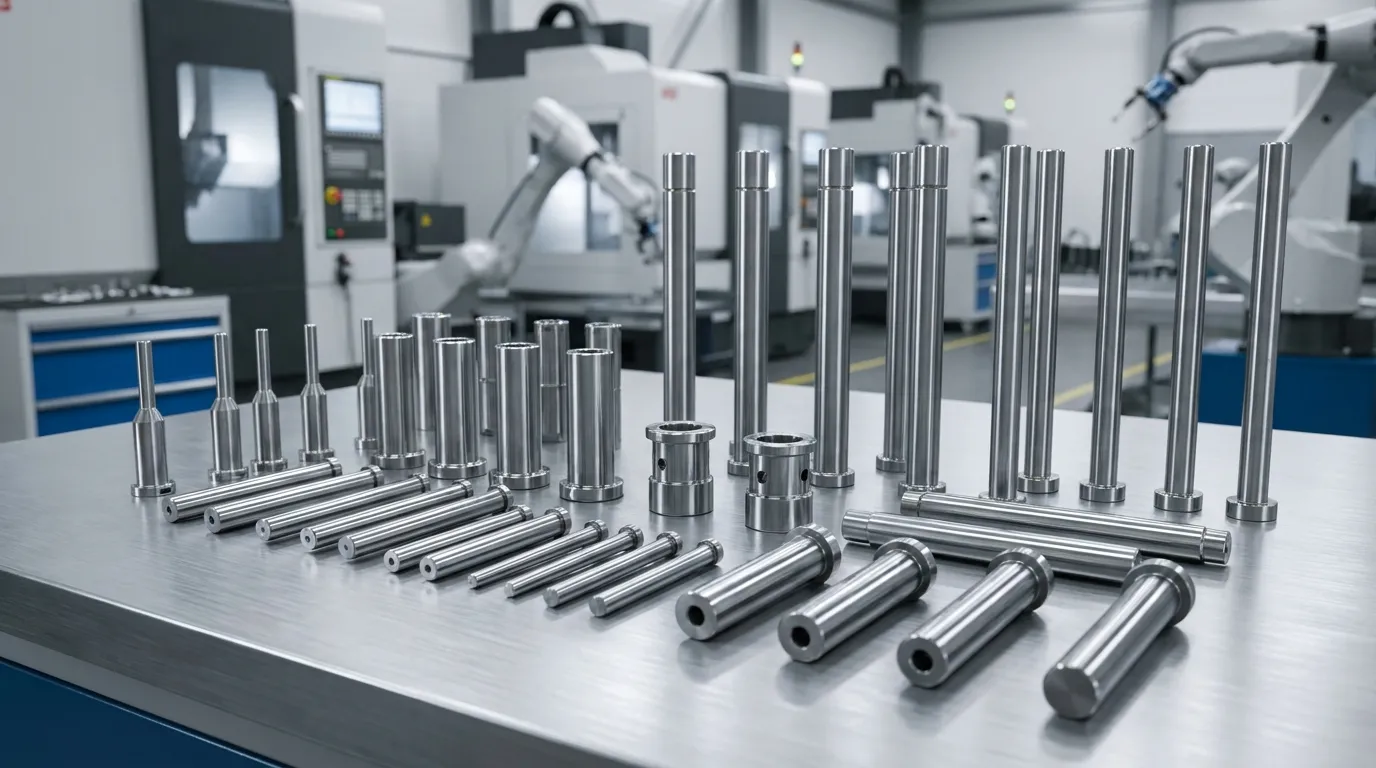
Standard plastic mold parts are pre-manufactured components such as ejector pins, Mangas, Postes guía, and bushings used across injection molds. Buyers choose them to simplify maintenance, reduce lead times, and improve replacement consistency.
Standard mold components are designed around common dimensions and tolerances. Instead of machining every part from scratch, mold builders use standardized pieces that can be replaced quickly during maintenance or production repairs.
These components support mold alignment, part ejection, wear control, and overall production stability. Many manufacturers prefer standardization because replacement inventory is easier to manage across multiple tools and production lines.
For a broader look at mold systems and terminology, see this Guía completa de componentes del molde.
| Pieza común del molde | Función primaria |
|---|---|
| Pasadores eyectores | Empuja las piezas terminadas fuera del molde |
| Mangas eyector | Eyección de soporte alrededor de los núcleos |
| Postes guía | Mantener la alineación del molde |
| Bujes guía | Reducir el desgaste de la alineación |
| Clavijas de retorno | Reiniciar sistemas de eyección |
| Pines del núcleo | Características internas de la forma |
Standardization also helps maintenance teams. If multiple molds use the same guide bushings or ejector sleeves, replacement becomes faster during shutdowns or emergency repairs.
Which mold components wear out most often?
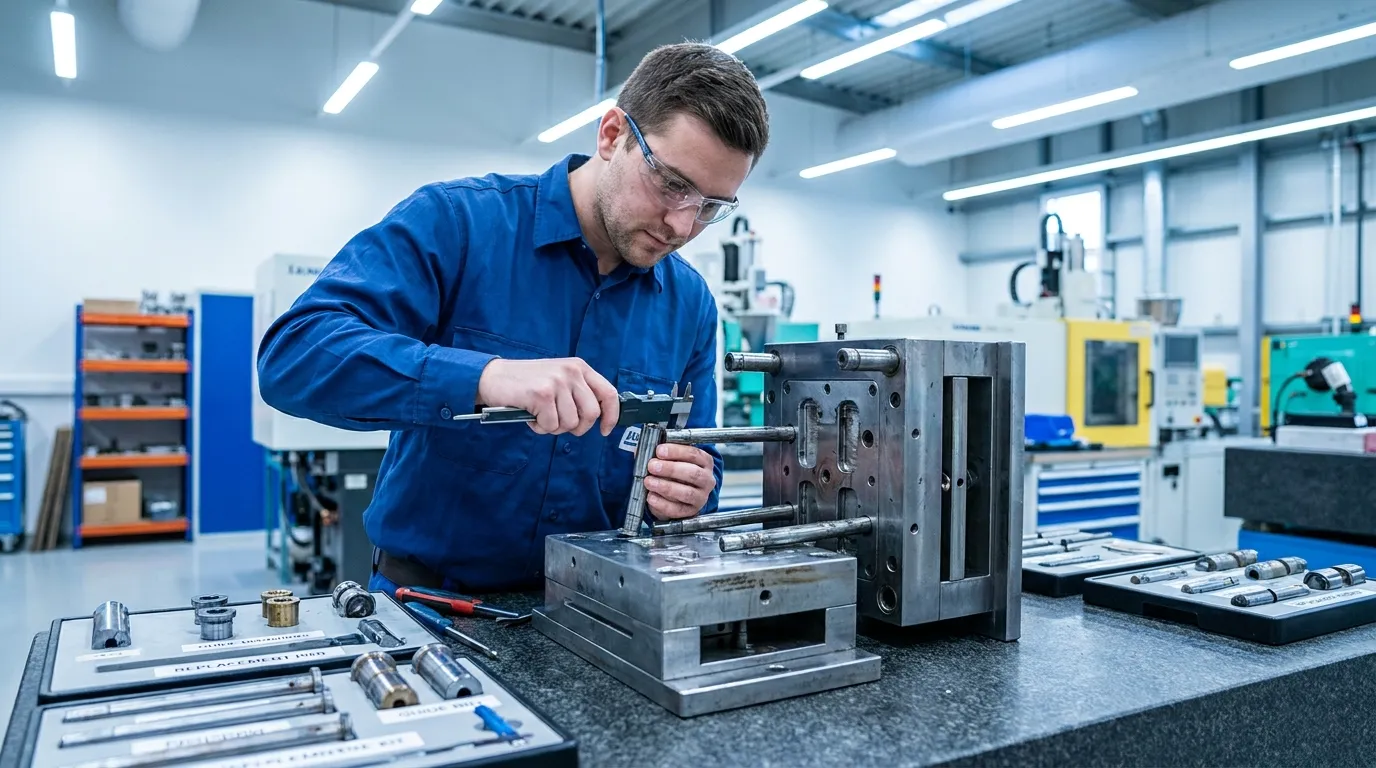
Pasadores eyectores, Mangas, and guide bushings are among the most frequently replaced mold components because they operate under repeated friction, Presión, y tensión de alineación. Buyers should prioritize wear resistance and replacement availability when sourcing these parts.
High-wear components usually sit in areas with constant movement or friction. Ejector systems cycle every time the mold opens, while guide systems absorb alignment loads during clamping. Con el tiempo, this repeated movement creates wear that affects precision and part quality.
Abrasive resins can accelerate damage. A consumer electronics mold using glass-filled plastic may wear through low-grade ejector pins much faster than expected. In high-cycle production, buyers often switch to higher-hardness steel grades to extend replacement intervals.
Lista de verificación de componentes de molde de alto desgaste
- Pasadores eyectores expuestos a ciclos repetidos
- Mangas eyector que funcionan alrededor de núcleos móviles
- Guía de los casquillos para manejar la presión de alineación del molde
- Pines del núcleo expuestos al flujo de resina abrasiva
- Componentes de alineación afectados por vibraciones o desalineaciones
Downtime costs also change replacement strategy. One production manager calculated that a single day of downtime cost more than keeping several sets of spare guide pins and sleeves in inventory. That made preventive stocking easier to justify.
Puedes explorar más Componentes de desgaste del molde commonly replaced during maintenance cycles.
Should you choose standard or custom mold components?
Standard mold components usually reduce lead time and simplify maintenance, while custom parts work better for specialized geometries or unique production requirements. The best choice depends on production volume, Frecuencia de reemplazo, and mold complexity.
Standard parts work well for most injection mold applications because they are easier to source and replace. Buyers can often reduce maintenance downtime by choosing widely available dimensions and configurations.
Custom components become necessary when molds require unusual geometry, non-standard movement, or specialized cooling and ejection layouts. Médico, Aeroespacial, and highly engineered automotive molds often need custom features that standard catalogs cannot support.
Standard mold parts are not always the best option. They reduce lead time and simplify maintenance, but custom components are often safer for unusual geometries or specialized production environments.
Tabla de decisiones para piezas de molde estándar vs personalizadas
| Factor | Componentes estándar | Componentes personalizados |
|---|---|---|
| Tiempo de espera | Normalmente más corta | A menudo más largo |
| Velocidad de reemplazo | Más rápido | Más lento |
| Coste inicial | Inferior | Más alto |
| Flexibilidad en mantenimiento | Más fácil | Más especializado |
| Compatibilidad | Broad | Limitada |
| Personalización de precisión | Moderado | Alto |
An automotive mold project may use standard guide bushings to shorten replacement lead times during planned shutdowns. En contraste, a medical device mold might require custom ejector layouts because of strict geometry and surface requirements.
For more specialized tooling options, Revisa estos Accesorios de molde personalizados before finalizing your design.
How do ejector pins and sleeves affect mold performance?
Ejector pins and sleeves directly affect part release consistency, Desgaste por moho, and production uptime. Poor fit or incorrect hardness can increase friction, create flash issues, and shorten mold service life.
Ejector systems control how finished parts leave the cavity after cooling. If pin sizing or alignment is incorrect, the mold may produce sticking, uneven marks, or damaged surfaces. Small tolerance issues can become major production problems during high-volume runs.
Sleeves are commonly used around round cores or deep cylindrical features. They distribute ejection force more evenly than standard pins in certain applications. Buyers should compare hardness, Acabado superficial, and fit accuracy before selecting either option.
When should you upgrade to higher-hardness ejector pins?
Higher-hardness ejector pins make sense when molds run abrasive materials, high cycle counts, or elevated temperatures. Low-cost ejector pins can increase downtime costs later because softer materials wear faster under repeated friction.
A consumer electronics supplier using glass-filled resin upgraded to hardened ejector pins after repeated wear caused sticking and flash defects. The replacement cost increased slightly, but production interruptions dropped significantly.
Tabla de selección si-entonces
| Si esta condición existe | Considera esta solución |
|---|---|
| Desgaste por resina abrasiva | Pasadores eyectores endurecidos |
| Núcleos cilíndricos profundos | Mangas eyector |
| Problemas frecuentes de alineación | Sistemas de guía de precisión |
| Producción de alto ciclo | Acero resistente al desgaste |
| Problemas de marcado superficial | Mejora del acabado de los pasadores |
Los compradores que comparen sistemas de eyección también deberían revisar los disponibles Sistemas de pasadores eyector before locking final specifications.
Which materials are commonly used in plastic mold parts?
Tool steel selection affects wear resistance, Estabilidad dimensional, corrosion performance, y vida útil del molde. Buyers should match component materials to production volume, Tipo resina, and operating temperature instead of choosing solely on price.
Most standard mold components use hardened tool steel because it handles repeated pressure and friction well. Stainless grades may be used when corrosion resistance matters, especially in molds exposed to moisture-sensitive or corrosive materials.
Heat treatment also changes performance. Proper hardening improves wear resistance and extends service life, but excessive hardness can increase brittleness in certain applications.
| Tipo de material | Ventaja típica | Uso común |
|---|---|---|
| Acero de herramienta endurecido | Resistencia al desgaste | Pasadores eyectores, Bujes |
| Acero inoxidable | Protección contra la corrosión | Entornos médicos y húmedos |
| Acero aleado tratado térmicamente | Fuerza y dureza | Componentes de alta carga |
Material quality matters most in high-cycle environments. A low-cost guide bushing may work for limited production, but repeated cycling can quickly increase clearance and alignment wear.
What tolerances matter most when selecting mold parts?
Tolerances affect alignment, Ajuste, Patrones de desgaste, and replacement consistency. Even small dimensional differences can create flashing, pegado, or premature component wear during production.
Guide systems require especially tight tolerance control because alignment errors increase friction across the mold. Ejector systems also depend on proper clearance to prevent sticking or uneven movement.
Áreas de tolerancia crítica
- Montaje del poste guía y del casquillo
- Espacio para los pasadores del eyector
- Consistencia del acabado superficial
- Precisión de alineación entre mitades móviles
- Compatibilidad de reemplazo entre moldes
Buyers sometimes focus only on material hardness and overlook fit accuracy. That creates avoidable maintenance problems later. A properly fitted standard component often performs better than a harder but poorly matched replacement part.
For additional tolerance and tooling guidance, Revisa estos Normas de moldes de precisión before finalizing specifications.
What sourcing and customs issues delay mold part delivery?
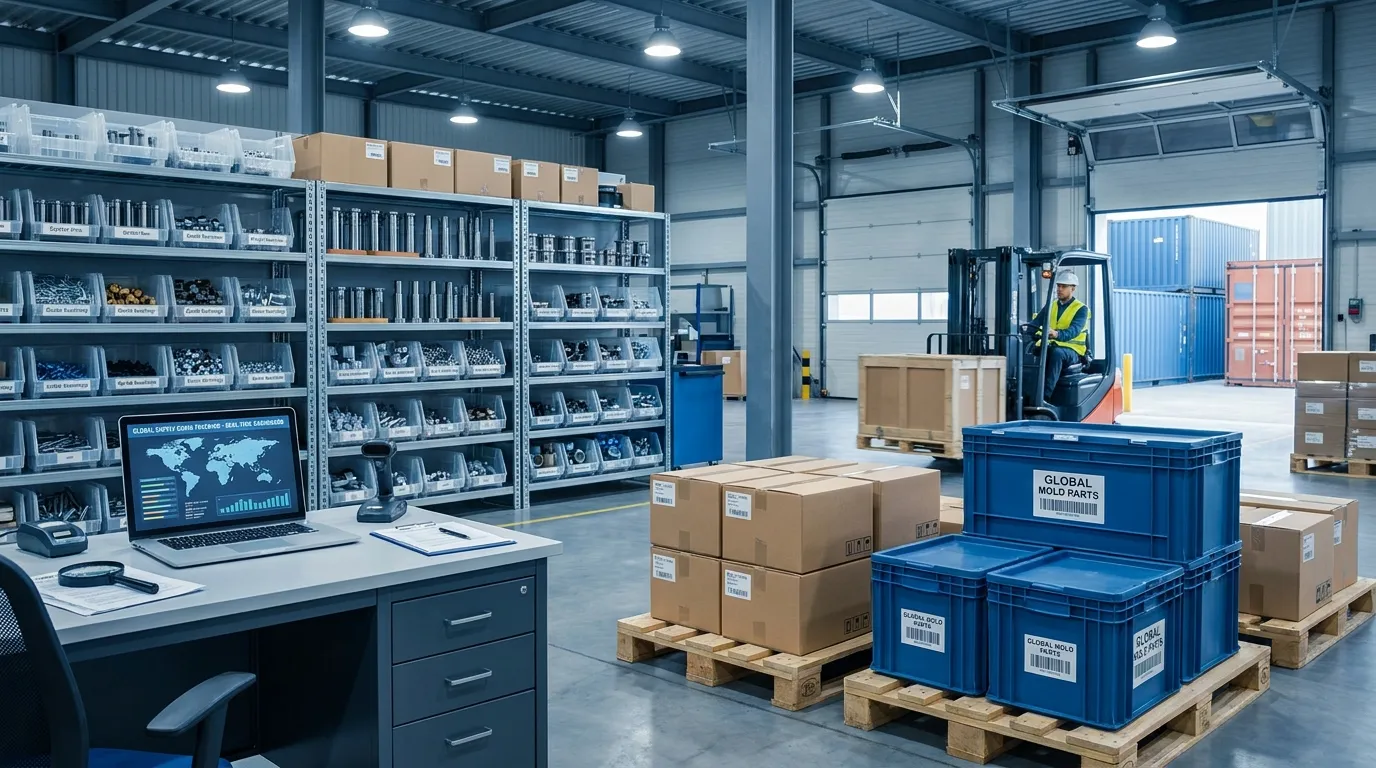
Mold part delivery delays often come from incomplete customs documentation, incorrect classifications, production bottlenecks, or low inventory availability. Buyers can reduce delays by standardizing parts, confirming documentation early, and maintaining critical spare stock.
Lead times for mold components involve more than manufacturing. International shipping, customs clearance, and inventory shortages can delay replacement parts long after production is complete.
Según las directrices de cumplimiento aduanero de NG Terminal, shipment holds increasingly come from documentation and compliance problems rather than port congestion alone.
Cómo afecta el cumplimiento aduanero a las importaciones de componentes de moho
Incorrect HS classifications, incomplete paperwork, or missing compliance details can delay industrial component imports. Bangladesh customs updates for industrial imports also show how documentation requirements continue changing for international shipments through Costumbres de Bangladés.
Production scheduling creates another risk. Investigación de Ulitech Precision explains how tooling timelines already include machining, Validación, and approval stages before shipment even begins.
Lista de verificación para la obtención de componentes de molde
- Confirma las especificaciones de la pieza antes de hacer el pedido
- Verifica los códigos HS y la documentación aduanera
- Comprobar la disponibilidad de inventario de los proveedores
- Guarda en stock componentes de repuesto de alto desgaste
- Evita reemplazos personalizados de fuente única siempre que sea posible
Overseas sourcing only works well when replacement planning is already in place. Buyers who rely on one custom component supplier without backup inventory create unnecessary production risk.
También puedes reseñar más amplios Obtención de componentes de molde considerations before planning large tooling orders.
Which mold parts should you keep in stock?
Buyers should keep high-wear and high-risk mold components in stock, especially ejector pins, Mangas, Bujes guía, y partes de alineación. Spare inventory reduces emergency downtime and protects production schedules during shipping or customs delays.
No todos los componentes de molde necesitan inventario de respaldo. Focus first on parts with high wear rates, long replacement lead times, or major production impact if failure occurs.
Medical production teams often keep spare ejector sleeves available because customs delays can interrupt regulated manufacturing schedules. En muchos casos, carrying a small inventory costs far less than unexpected downtime.
Lista de verificación para el inventario de repuesto de moho
| Componente | Frecuencia de desgaste | Riesgo de inactividad | Nivel de stock sugerido |
|---|---|---|---|
| Pasadores eyectores | Alto | Alto | Conjuntos múltiples |
| Bujes guía | Medio | Alto | Conjunto de respaldo |
| Mangas eyector | Alto | Medio | Conjunto de respaldo |
| Pines del núcleo | Medio | Medio | Apoyo limitado |
| Partes de alineación | Medio | Alto | Conjunto de respaldo |
Injection molding timelines already include tooling and validation stages, Según Moldeo de plástico Evok. Delayed replacement parts can extend those timelines even further if critical components are unavailable.
En esta guía hay más consejos de planificación disponibles para Piezas de molde de repuesto for production maintenance teams.
How should buyers evaluate mold component suppliers?
Price matters, but supplier consistency matters more. Buyers should compare tolerance control, Disponibilidad de inventario, Sistemas de calidad, and delivery reliability before approving a supplier.
A sourcing team comparing two vendors may find one supplier offers lower pricing but no stocked inventory. If emergency replacement parts require extended manufacturing time, the cheaper option can become more expensive during downtime.
Lista de verificación de evaluación de proveedores
- Disponibilidad de certificación de materiales
- Profundidad de inventario para componentes estándar
- Capacidad de control de tolerancias
- Consistencia en la producción
- Plazos de entrega de reemplazo
- Proceso de inspección de calidad
- Capacidad de respuesta a la comunicación
Supplier capability also affects scaling. Industry sourcing guidance from El Grupo Rodon highlights the importance of production capacity and operational consistency when evaluating manufacturing partners.
If you're reviewing suppliers across broader tooling systems, esto Guía de moldes de inyección de plástico can help connect component decisions to overall mold production planning.
Qué hacer a continuación
Choosing the right plastic mold parts comes down to reliability, Planificación de la sustitución, and production fit. Standard components often reduce maintenance delays and simplify inventory management, but custom solutions still matter for specialized tooling.
Start by identifying the highest-wear components in your molds. Then compare material quality, tolerance control, and supplier inventory support before ordering. Buyers who standardize critical components and maintain spare inventory usually reduce downtime risk and simplify long-term maintenance planning.
Preguntas frecuentes
What are mold components?
Mold components are the replaceable parts used inside injection molds, incluyendo pasadores eyectores, Bujes, Mangas, Postes guía, and inserts. They support alignment, part ejection, Resistencia al desgaste, and overall mold performance.
What are ejector pins used for?
Ejector pins push finished plastic parts out of the mold cavity after cooling. Proper pin selection helps prevent sticking, Daños superficiales, and uneven ejection during production.
What is the difference between standard and custom mold parts?
Standard mold parts use common dimensions and specifications, while custom parts are built for unique tooling requirements. Standard components usually reduce replacement delays and simplify maintenance planning.
What materials are used for mold components?
Mold components commonly use hardened tool steel, Acero inoxidable, and heat-treated alloy materials. Material selection depends on wear resistance, Exposición a la corrosión, Volumen de producción, and resin type.
¿Cuánto duran los componentes del molde??
Mold component lifespan depends on production volume, Calidad del material, Mantenimiento, and molding conditions. High-wear parts like ejector pins and bushings usually require replacement more often than structural mold sections.
What causes injection mold delays?
Injection mold delays often come from tooling revisions, inventory shortages, customs clearance issues, and production bottlenecks. Highly customized components can increase replacement lead times and sourcing risk.
Compartir:



Escrito por Sunshine
Al sol, Somos un fabricante y proveedor profesional de componentes de moldes de precisión, ofreciendo una amplia gama de productos para aplicaciones de estampado y moldes de inyección. Nuestro enfoque principal es el punzonamiento de troqueles, Pasadores y fundas eyector, y postes guía y casquillos. Con mecanizado CNC avanzado, Control de calidad estricto, y una fuerte capacidad de producción, Garantizamos la fiabilidad, Piezas de alta precisión, junto con componentes estándar en stock para un suministro global rápido y eficiente.
NOTICIAS
CONSIGUE EL SERVICIO
Con piezas de calidad para todos los presupuestos y personal amable formado para que tu visita sea informativa y sin complicaciones.
