



Moldeo por inyección de precisión: Tolerancia, Repeatability, y Control de Calidad
Precision injection molding is a manufacturing method used to produce plastic parts with extremely tight tolerances, stable repeatability, and strict quality control. It relies on controlled machine settings, high-accuracy molds, and continuous monitoring to keep parts consistent across large production runs. This makes it essential for industries like medical devices, Electrónica, and automotive, where even small deviations can affect performance or assembly.
Precision injection molding is not just about making small plastic parts. It’s about making identical parts, every single time, within extremely tight limits. That level of control is what separates standard molding from precision-grade production. In industries where fit, Función, and reliability matter, even tiny variations can cause real problems. Understanding how this process works is key before choosing it for production.
What makes injection molding “precision” in the first place?
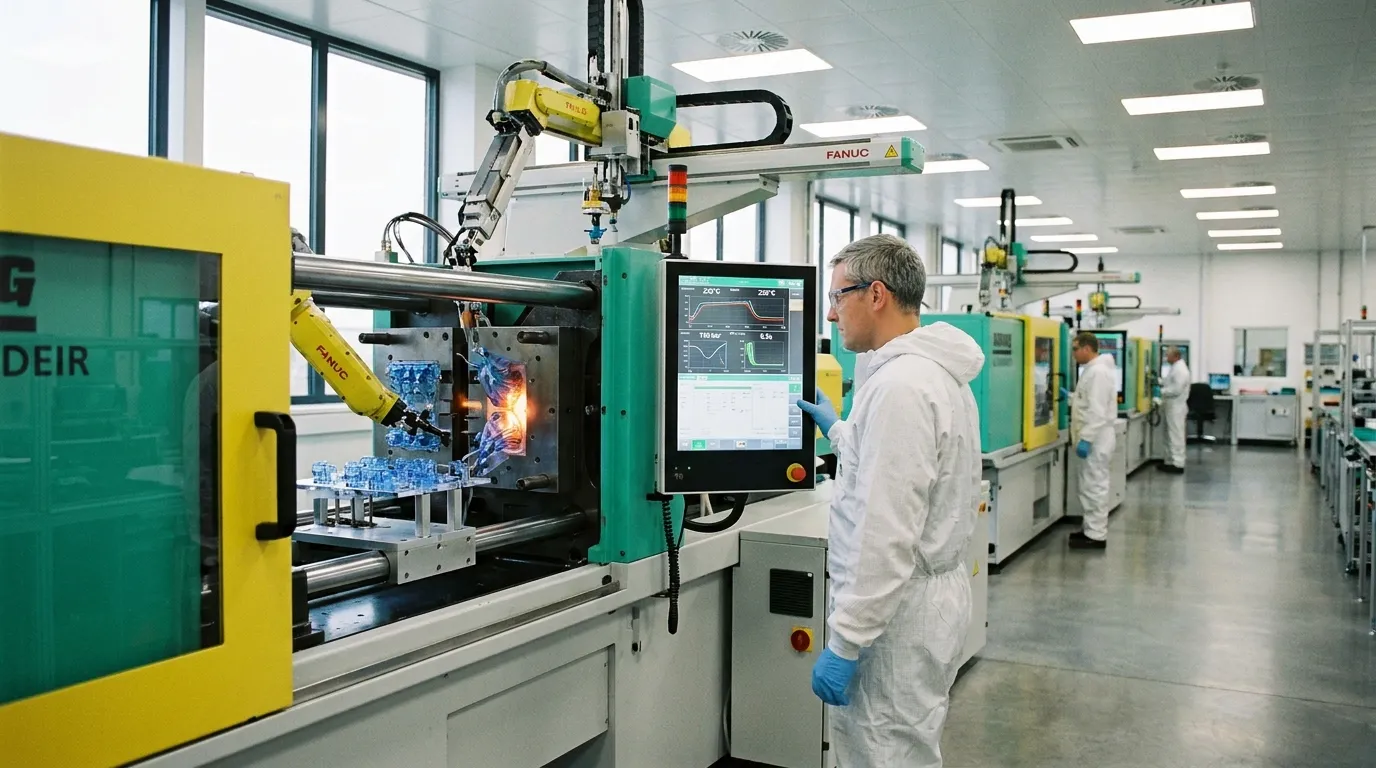
Precision injection molding is defined by its ability to produce parts with extremely tight dimensional control and consistent repeatability across production cycles. It focuses less on basic shaping and more on controlling variation at every stage of production.
Instead of just filling a mold with plastic, the process tightly controls pressure, Temperatura, cooling rate, and injection timing. El objetivo es sencillo: every part must match the same dimensions within a very small tolerance range. This is what separates it from standard molding, where small variations are more acceptable.
The difference also comes from equipment and tooling. Precision systems use high-accuracy molds, advanced machine calibration, and controlled environments. Even small changes in melt behavior or cooling can affect final dimensions, so everything is tightly monitored.
Según explicaciones de la industria como Ventas de EI, this approach is essential when parts must fit together perfectly or perform in sensitive assemblies where deviation is not acceptable.
How tight are tolerances in precision injection molding really?
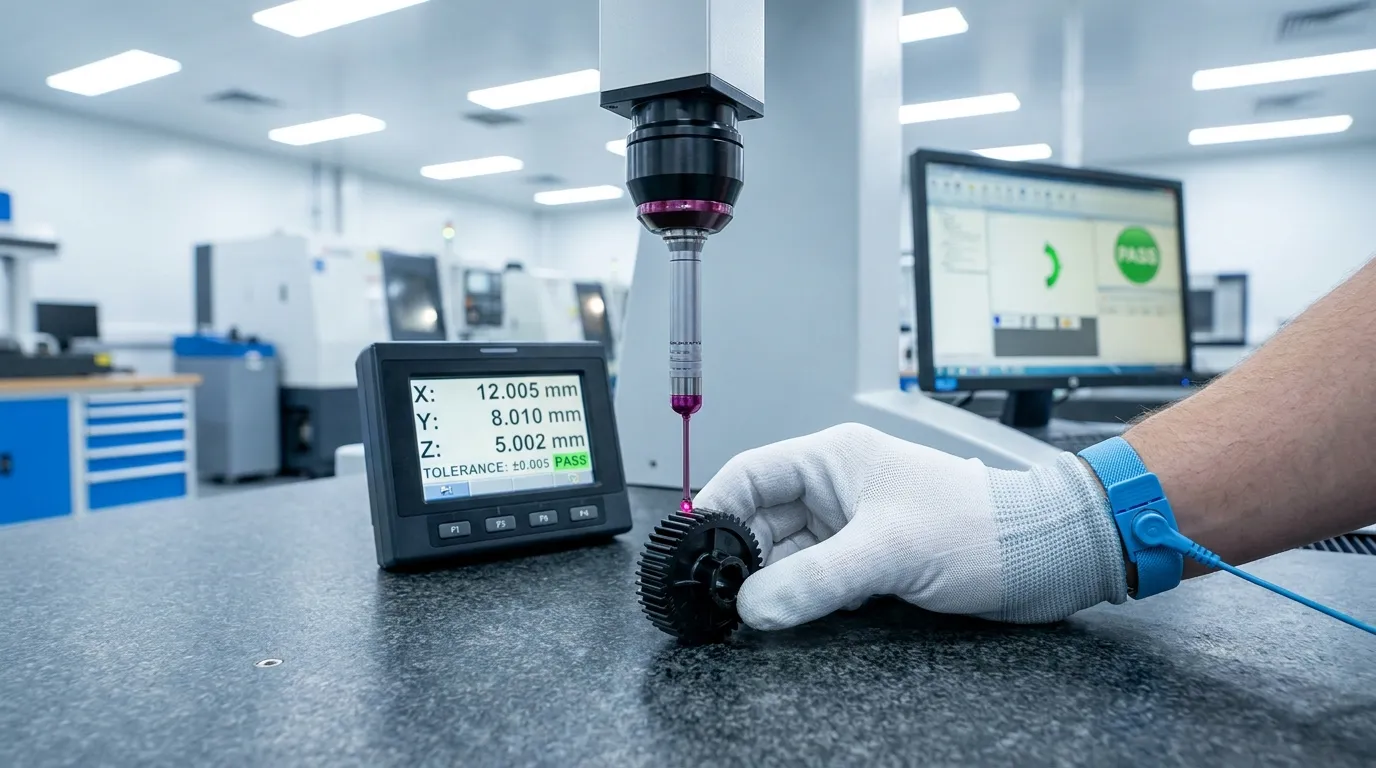
Precision injection molding typically achieves tolerances as tight as ±0.01 mm depending on part design, Material, and process stability. However, maintaining this level consistently depends on mold quality and production control.
In real production, tolerance performance is influenced by material shrinkage, Desgaste por moho, y estabilidad térmica. That means even parts made from the same mold can vary slightly if conditions drift over time.
Here’s how tolerance levels generally compare:
| Nivel de aplicación | Rango típico de tolerancias | Notas |
|---|---|---|
| Moldura estándar | ±0,1 mm o más | Piezas generales para consumidores |
| Moldeo de alta precisión | ±0.05 mm | Ajuste de montaje ajustado |
| Moldeo de precisión | ±0.01 mm or better | Partes funcionales críticas |
Fuentes como Moho de zorro explain that precision molding is not just about hitting tight specs once, but maintaining them consistently across long production runs.
That consistency is what makes tolerance control valuable in real manufacturing environments.
What actually keeps every molded part identical over time?
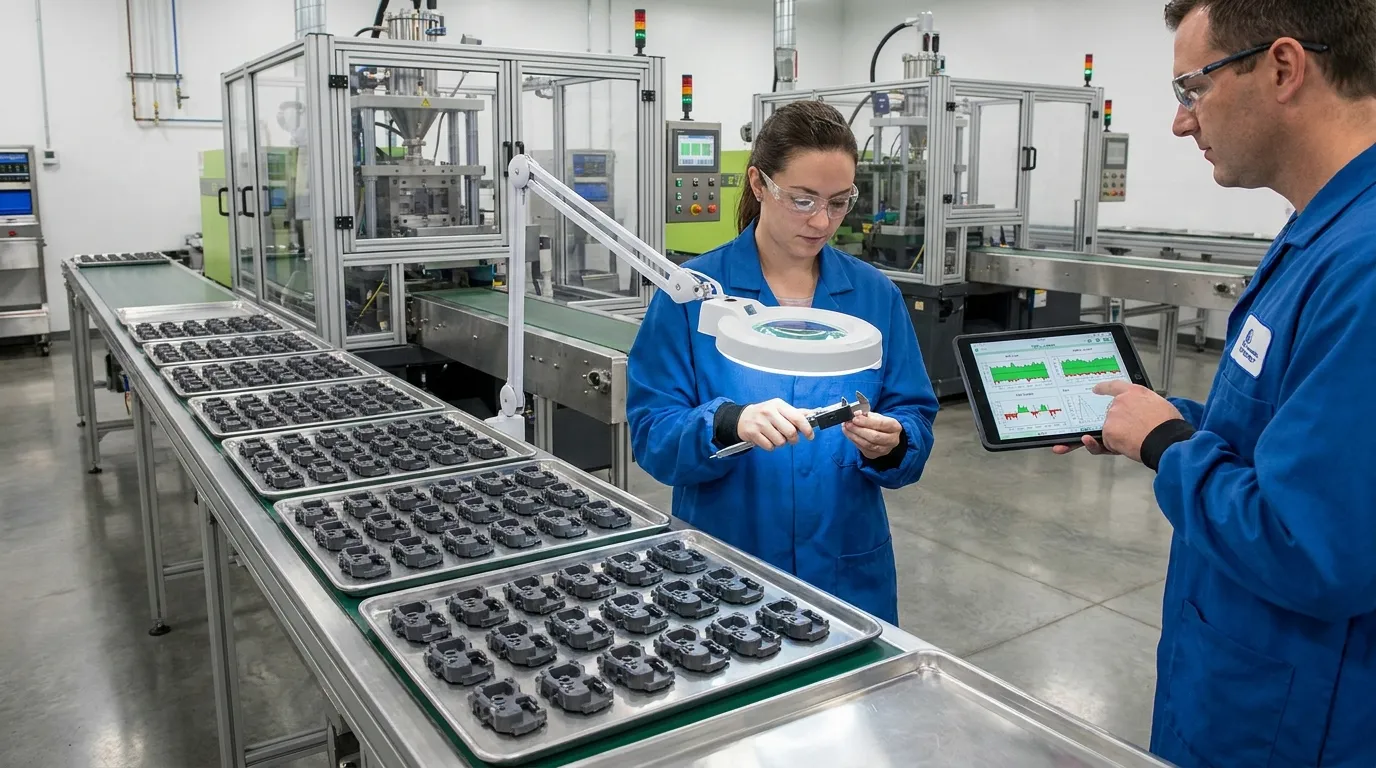
Repeatability in precision injection molding is achieved through strict control of machine parameters, mold stability, and continuous process monitoring.
The injection molding machine controls injection pressure, melt temperature, and cycle timing with high accuracy. Even small variations can affect part dimensions, so modern systems use closed-loop control to reduce drift.
Mold design also plays a major role. High-precision molds are built to resist deformation under repeated thermal and mechanical stress. If the mold changes shape, repeatability quickly drops.
Papel de la máquina vs del molde en la repetibilidad
- Machine systems: control pressure, Velocidad, and temperature stability
- Mold systems: mantener la forma de la cavidad y la consistencia térmica
- Monitorización de procesos: detecta pequeñas desviaciones antes de que afecten a la salida
Como se explica en Sistemas de moldeo de precisión de ENGEL, stable interaction between these elements is what keeps parts consistent in high-volume production.
Why do precision molded parts still vary or fail?
Even in precision injection molding, variation can occur due to material behavior, Desgaste por moho, or unstable process conditions.
One of the main causes is material shrinkage. Different plastics cool at different rates, and small changes in cooling conditions can shift final dimensions.
Mold wear is another factor. Over long production cycles, cavity surfaces slowly change, which can affect critical measurements even if the change is microscopic.
- Inconsistencia de contracción del material durante el enfriamiento
- Fluctuaciones térmicas en los ciclos de producción
- Desgaste de cavidades por moho tras largas tiradas
- Deriva de presión o velocidad de inyección
These issues usually appear gradually rather than suddenly. Parts may still look correct but slowly drift out of tolerance over time if not monitored.
How is quality controlled in precision injection molding production?
Quality control in precision injection molding relies on continuous inspection, statistical monitoring, and process feedback systems.
One common method is statistical process control (SPC), which tracks production measurements over time. If values begin to drift, adjustments are made before parts go out of specification.
Inspection is also performed frequently using precision tools such as coordinate measuring machines (CMMs) or optical measurement systems. This ensures consistency across batches rather than relying only on final checks.
- Las comprobaciones en línea capturan la variación temprana
- El muestreo garantiza la consistencia por lotes
- Los sistemas SPC detectan deriva a largo plazo
Como se señala en Resumen del moldeo de precisión de Fabrik, combining monitoring with measurement systems is key to stable high-volume production.
Aprende más sobre sistemas de producción en Resumen del servicio de moldeo por inyección de plástico.
When does precision injection molding actually make sense?
Precision injection molding makes sense when part performance depends on exact fit, Alineación, or repeatable function across large volumes.
If small variations do not affect function, standard molding is usually more cost-effective. But when deviation leads to assembly issues or failure, precision becomes necessary.
This is common in industries like medical devices, Electrónica, and automotive sensors where accuracy directly impacts performance.
- Conjuntos mecánicos compactos
- Sistemas de conectores eléctricos
- Carcasas de dispositivos médicos
- Componentes ópticos o de sensores
Precision molding increases cost due to tighter control and tooling requirements, so the decision should always balance function and budget.
Explora opciones de fabricación en Servicios de moldeo por inyección personalizados.
Qué hacer a continuación
Precision injection molding is about control, Consistencia, and predictable performance. When your product depends on tight tolerances and stable repeatability, this process becomes essential rather than optional.
The key is understanding when precision actually matters. Some parts can tolerate small variation without issue, while others cannot. Evaluating that early helps avoid unnecessary cost and production risk. If you're planning a project, comparing tolerance needs before tooling decisions are locked in can save significant time and expense.
Preguntas frecuentes
What is precision injection molding?
It is a manufacturing process that produces plastic parts with extremely tight tolerances and high repeatability. It is used when standard injection molding cannot meet strict dimensional or functional requirements in final assemblies.
What tolerance can precision injection molding achieve?
It can reach tolerances as tight as ±0.01 mm depending on part geometry and material behavior. However, consistent results depend on mold quality, machine calibration, and stable processing conditions.
What industries use precision injection molding?
It is commonly used in medical devices, automotive systems, Electrónica, and aerospace components. These industries require exact part fit and reliable long-term performance.
Why is precision injection molding expensive?
It requires high-precision molds, advanced machines, and strict process monitoring systems. These factors increase setup time and production cost compared to standard injection molding.
How is repeatability maintained in precision molding?
Repeatability is maintained by controlling temperature, Presión, and injection speed while using stable molds and continuous process monitoring systems. Small deviations are detected early and corrected.
What causes defects in precision injection molding?
Common causes include material shrinkage variation, Desgaste por moho, thermal instability, and process drift over time. These factors can slowly push parts out of tolerance if not controlled.
When should I choose precision injection molding?
You should choose it when part function depends on tight fit, Alineación, or consistent performance. If small variations do not affect performance, standard molding may be more cost-effective.
Compartir:



Escrito por Sunshine
Al sol, Somos un fabricante y proveedor profesional de componentes de moldes de precisión, ofreciendo una amplia gama de productos para aplicaciones de estampado y moldes de inyección. Nuestro enfoque principal es el punzonamiento de troqueles, Pasadores y fundas eyector, y postes guía y casquillos. Con mecanizado CNC avanzado, Control de calidad estricto, y una fuerte capacidad de producción, Garantizamos la fiabilidad, Piezas de alta precisión, junto con componentes estándar en stock para un suministro global rápido y eficiente.
NOTICIAS
CONSIGUE EL SERVICIO
Con piezas de calidad para todos los presupuestos y personal amable formado para que tu visita sea informativa y sin complicaciones.
