



Requisitos de acabado superficial de pasadores de punzón para desgaste y desmontaje
El acabado superficial es una de las especificaciones más ignoradas en un pasador perforador, Sin embargo, controla directamente dos resultados de rendimiento separados: cuánto tiempo resiste el pasador al desgaste, y lo limpiamente que libera el slug o el material formado tras cada trazo. Un requisito típico de acabado superficial para pasadores de punzón requiere una fina, Valor de rugosidad controlado logrado mediante rectificado o lapeado de precisión, no solo el número más ajustado disponible. Los pasadores de perforación son uno de los varios componentes del chip que cubren nuestro Guía de componentes del chip (Inferido), Pero la especificación del acabado merece su propia explicación porque equivocarse provoca dos modos de fallo muy diferentes: Desgaste prematuro en un lado, y pegar o irritar el otro.
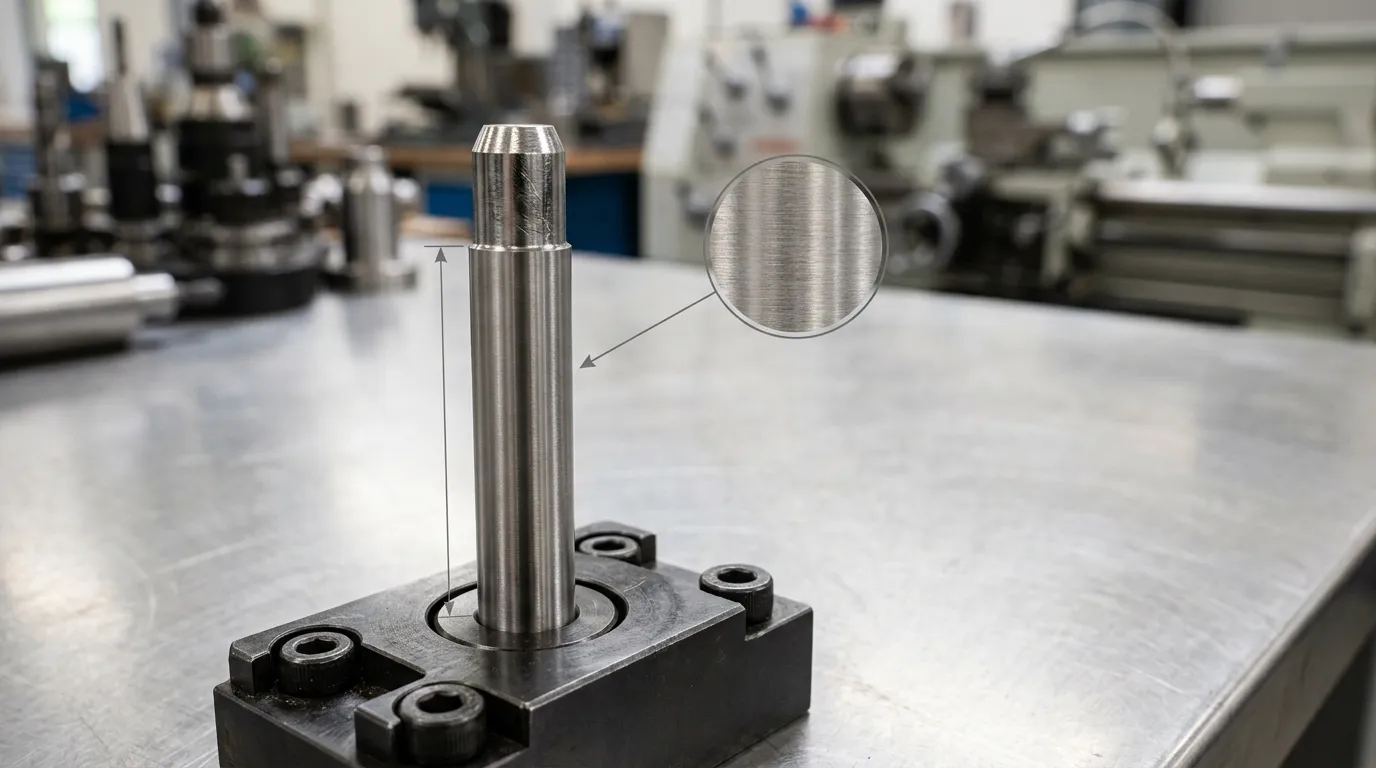
Recommended Surface Finish Values for Punch Pins
El acabado superficial del pasador de punzón casi siempre se especifica como un promedio de rugosidad (Ra), expresado en micrómetros o micropulgadas, más que como una nota visual o subjetiva. Los punzones y pasadores de Sunshine se fabrican con acabado Ra0.4 con tolerancias dentro de ±0.002mm, Lo que establece un punto de referencia concreto para cómo es en la práctica una superficie de pasador de perforación pulida con precisión.
That said, "El acabado correcto" Depende de la aplicación. Un pasador de punzón que ejecuta altos recuentos de ciclos contra chapa abrasiva requiere un control más estricto que uno usado en bajo volumen, Operaciones de baja fricción. Para contextualizar, Las referencias generales de mecanizado clasifican los acabados más finos (aproximadamente 0,8 μm Ra y menos) como adecuado para sellado o superficies de ajuste preciso, mientras que las calificaciones más gruesas se reservan para caras no críticas. Los pasadores de punzón suelen situarse hacia el extremo más fino de ese rango porque su superficie de trabajo está en constante, Contacto repetido con la pieza.
| Finish Level | Approximate Ra | Typical Use on Punch Pins |
|---|---|---|
| Fine/precision | ≤0.4–0.8 µm Ra | Estampado de alto ciclo, Agujeros de tolerancia estrecha, materiales abrasivos |
| Estándar | 0.8–1.6 µm Ra | General-purpose stamping with moderate cycle counts |
| Coarse | >1,6 μm Ra | Non-critical or low-frequency operations |
How Punch Pin Surface Finish Is Achieved
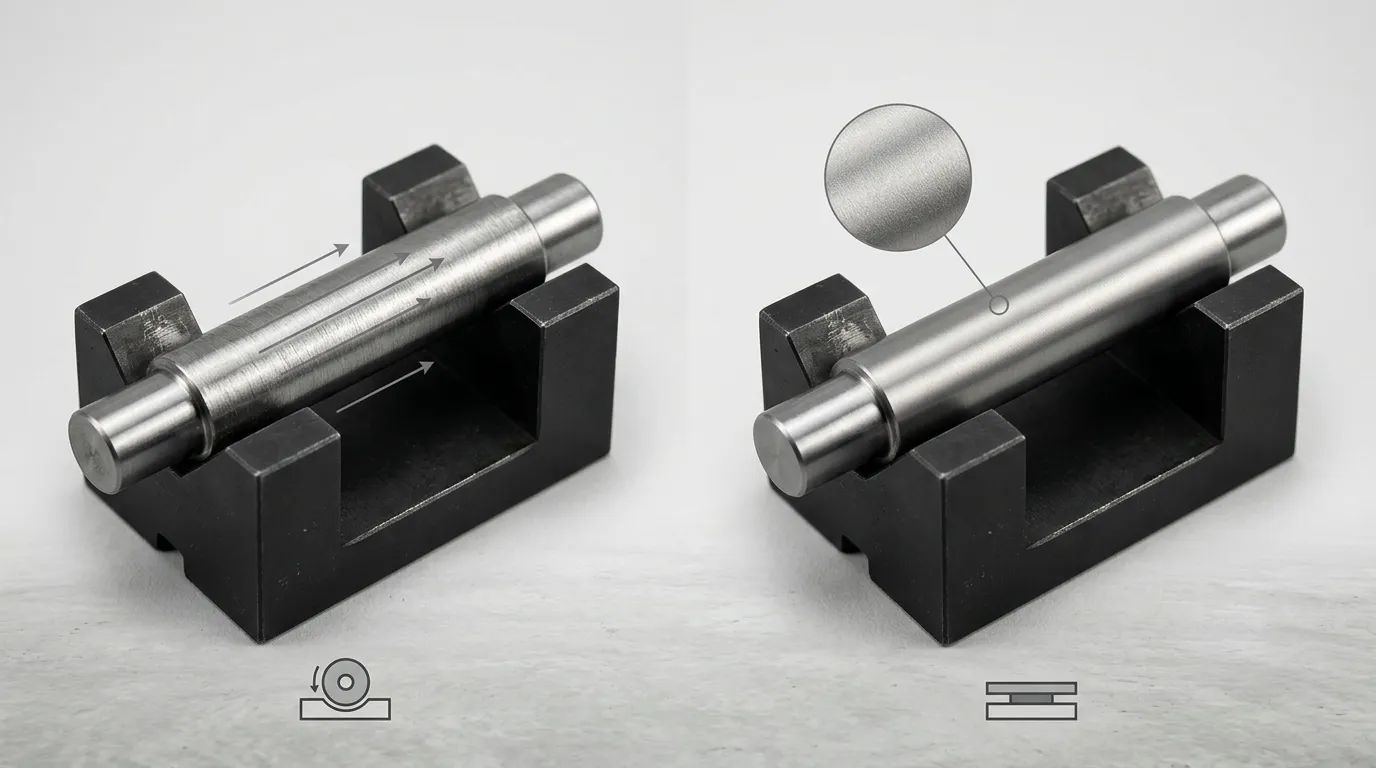
Dos procesos explican la mayor parte del acabado de pasadores de punzonado: Molido y lapeado. El rectificado elimina material con una rueda abrasiva y normalmente se aplica a lo largo de una orientación específica en el diámetro de trabajo del pasador; Esta orientación influye en cómo se comporta el acabado bajo fricción, Dado que las líneas de rectificado que corren paralelas a la dirección del flujo del material pueden afectar la suavidad con la que el slug se desliza desde la punta. El daleado es más lento, El proceso abrasivo más fino suele reservarse para diámetros interiores de tolerancia ajustada o cuando es especialmente uniforme, Se necesita un acabado sin dirección.
| Método | Aplicación típica | Outcome |
|---|---|---|
| Grinding | General punch pin working surfaces | Casi, Acabado repetible; Comportamiento de fricción dependiente de la orientación |
| Lapping | Tight-tolerance bores or high-precision faces | Muy bien, acabado uniforme con un patrón direccional mínimo |
Ninguno de los dos procesos es inherentemente "mejor." La elección depende de la clase de tolerancia, La geometría del pasador, y si la aplicación es más sensible al desgaste o al rendimiento de liberación.
Why Surface Finish Determines Wear Life
La rugosidad superficial tiene un efecto directo, Relación medible con el uso. Una superficie más rugosa aumenta la fricción en la interfaz entre el punzón y la pieza, lo que acelera la pérdida de material en la punta y a lo largo del diámetro de trabajo con cada carrera. Las investigaciones sobre la durabilidad de las herramientas de punzonamiento han demostrado que el comportamiento del desgaste del adhesivo está influido tanto por la rugosidad superficial como por la presencia de recubrimientos de baja fricción, Confirmar que el acabado no es un detalle estético sino una variable del rendimiento, Tal y como se documenta en un university study on surface roughness and punching tool wear.
El acabado por sí solo no determina la resistencia al desgaste. Sunshine combina sus pinchos de punzonamiento molidos y lapeados con un proceso de tratamiento térmico que aumenta la dureza aproximadamente en un 30%, que actúa junto con el acabado superficial para prolongar la vida útil en lugar de sustituir la necesidad de un acabado controlado.
Why Surface Finish Affects Clean Part and Slug Release
El rendimiento de lanzamiento es la segunda mitad de la ecuación del acabado, Y es fácil retroceder. Una superficie demasiado rugosa puede agarrar el material de bala o de desecho en lugar de dejarla caer limpiamente, lo que lleva a dobles golpes, Balas atascadas, o partes marcadas. Menos intuitivamente, un acabado superficial que no se adapta a la aplicación, como una que es inconsistente o está mal orientada, También puede favorecer la agallación: transferencia localizada de adhesivo de material sobre la superficie del punzón que la endurece aún más y agrava el problema de liberación con el tiempo.
El despeje de los dados de punción juega un papel secundario aquí. Incluso un pasador de punzón bien acabado puede tener problemas para liberarse si el espacio libre se ajusta mal, aunque la altura libre en sí es una decisión de diseño separada del acabado superficial y se detalla con más profundidad en otros recursos de punzonado.
Matching Finish Requirements to Application Conditions
En lugar de tratar el acabado superficial como un número fijo único, Ayuda pensar en términos de lo que exige la aplicación.
| Application Factor | Finish Consideration |
|---|---|
| Alto ciclo, Estampado continuo | Favor a finer finish to slow wear progression over volume |
| Abrasive or coated sheet material | Mejor una fina, Un acabado más uniforme para reducir el riesgo de desgaste por adhesivo |
| Low-frequency or short-run production | A standard finish is often sufficient without added cost |
| Tight-tolerance hole production | Lapping may be preferred over grinding for consistency |
Estas son directrices generales más que reglas fijas, ya que el acabado correcto para un trabajo determinado depende del material específico, Velocidad de presión, y la clase de tolerancia involucrada. Para más información sobre cómo el diseño del troquel de punzonado interactúa con las elecciones de herramientas, ver nuestro Guía de troqueles de punzonados.
A Note on Coatings and Wear-Resistant Treatments
A veces se utilizan recubrimientos junto con acabados superficiales para reducir aún más el desgaste, ya que un suave, Un sustrato bien acabado proporciona al recubrimiento una mejor superficie a la que adherirse. Esto es una práctica general del sector más que una afirmación sobre algún recubrimiento específico que se ofrezca aquí, Y los compradores deben confirmar las opciones de recubrimiento directamente con su proveedor de herramientas.
Verifying Punch Pin Surface Finish
Una vez que se establece un requisito de finalización, Debe confirmarse en lugar de asumir. La verificación suele implicar medir la rugosidad con el valor Ra especificado y comprobar que el acabado sea consistente en toda la superficie de trabajo, No solo en un punto de muestra. Para una guía detallada de qué comprobar y cómo, ver nuestro punch pin inspection checklist.
Los problemas de acabado superficial también merecen distinguirlos de un modo de fallo separado pero relacionado: Fractura total. Un pasador de punzón desgastado o mal acabado se degrada gradualmente, mientras que la rotura tiende a ser repentina y de origen mecánico. Si estás solucionando problemas en un fallo de pasador de perforación, Nuestra guía sobre Rotura de punzones en troqueles de estampado Cubre ese patrón de fallo distintivo.
Conseguir el acabado superficial correcto es menos perseguir el menor número de Ra posible y más bien igualar el acabado, y el proceso utilizado para lograrlo, A cómo se usará realmente el pasador perforador. Comparando tu herramienta actual con los benchmarks anteriores, y en contra de la lista de verificación de inspección enlazada anteriormente, es un siguiente paso práctico antes de especificar o reordenar los pasadores de perforación para tu aplicación.
Compartir:



Escrito por Sunshine
Al sol, Somos un fabricante y proveedor profesional de componentes de moldes de precisión, ofreciendo una amplia gama de productos para aplicaciones de estampado y moldes de inyección. Nuestro enfoque principal es el punzonamiento de troqueles, Pasadores y fundas eyector, y postes guía y casquillos. Con mecanizado CNC avanzado, Control de calidad estricto, y una fuerte capacidad de producción, Garantizamos la fiabilidad, Piezas de alta precisión, junto con componentes estándar en stock para un suministro global rápido y eficiente.
NOTICIAS
CONSIGUE EL SERVICIO
Con piezas de calidad para todos los presupuestos y personal amable formado para que tu visita sea informativa y sin complicaciones.
